
A look inside the very human process behind my digital artwork
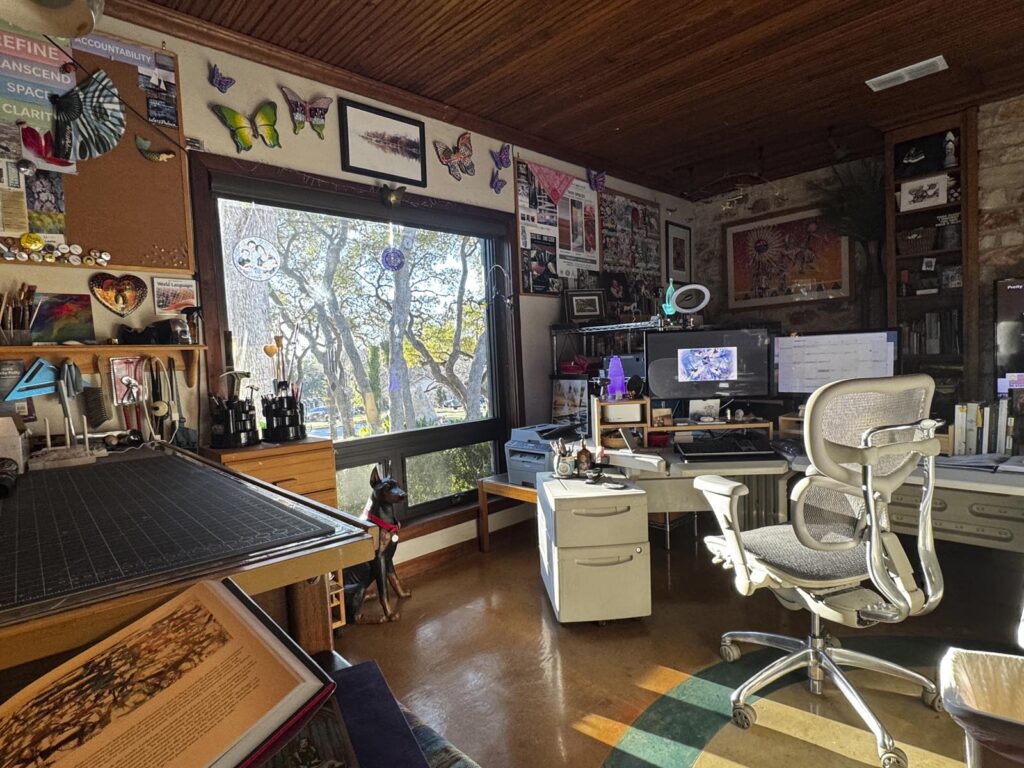
My artwork may be created digitally, but the process behind it is deeply hands-on. There is sometimes an assumption that digital art means clicking a button and letting a computer do the creative work. That has never been my approach.
Every image I create begins with something I have personally seen, photographed, drawn, designed, or imagined. I do not use generative AI to create my artwork, and I do not use stock photography or stock video. The photographs, video, drawings, compositions, textures, and visual elements that become part of my work are my own.
In an era when the boundaries between photography, digital art, and artificial intelligence are becoming increasingly blurred, I think it is worth being transparent about how my work is made.
A Digital Artist with a Traditional Beginning
My relationship with digital art didn’t begin with digital technology. I studied painting and illustration, and those disciplines shaped the way I still think about images today: composition, color, line, light, texture, visual storytelling, and the physical act of making.
After college, I spent decades working as a graphic designer and illustrator, learning how to construct images with intention. I eventually moved into photography, and in 2008 I began developing the process that has become the foundation of my current work—a way of bringing my own photographs together with digital drawing and design.
That evolution wasn’t a decision to abandon traditional artmaking. It was an expansion of it. The tools changed, but the way I think about an image did not. I simply found a new surface and a new set of tools with which to work: photographs, pixels, vectors, layers, masks, digital drawing, and light rather than canvas, paint, and physical materials.
The fundamental act remained the same: I make the image.
The Photography
Photography has been part of my life for as long as I can remember, although I didn’t think of myself as a photographer for most of that time. I was the person behind the camera—the one who was inevitably missing from the family photographs because I was the one taking them. I am entirely self-taught, and for a long time I simply thought of photography as something I did rather than something I was.
Eventually, I realized just how much photography had influenced the way I see.
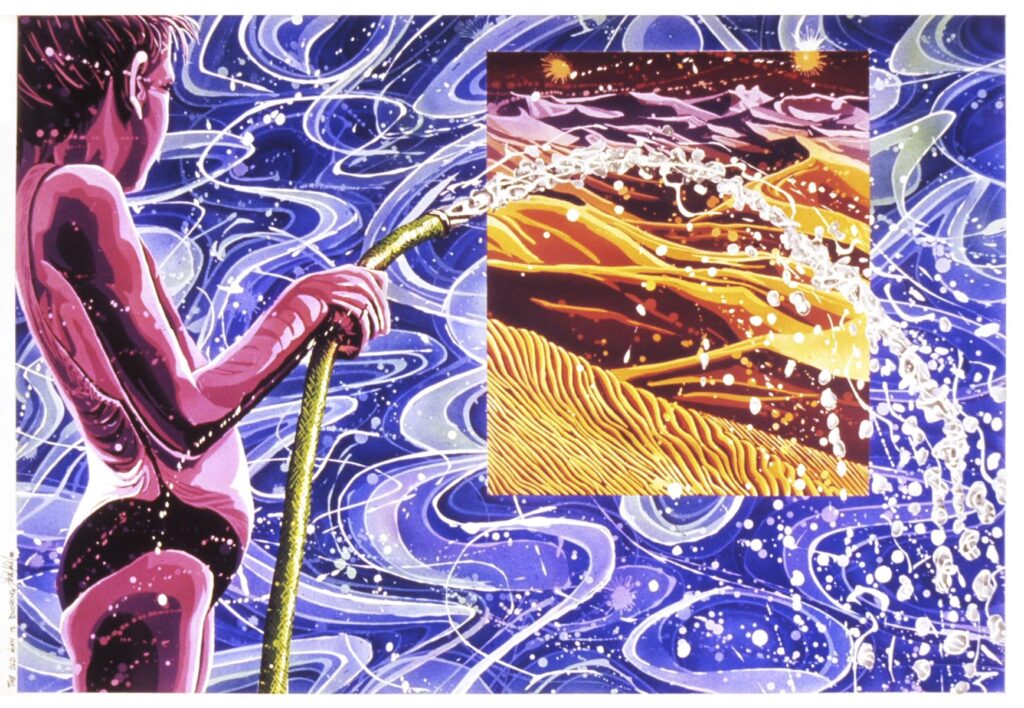
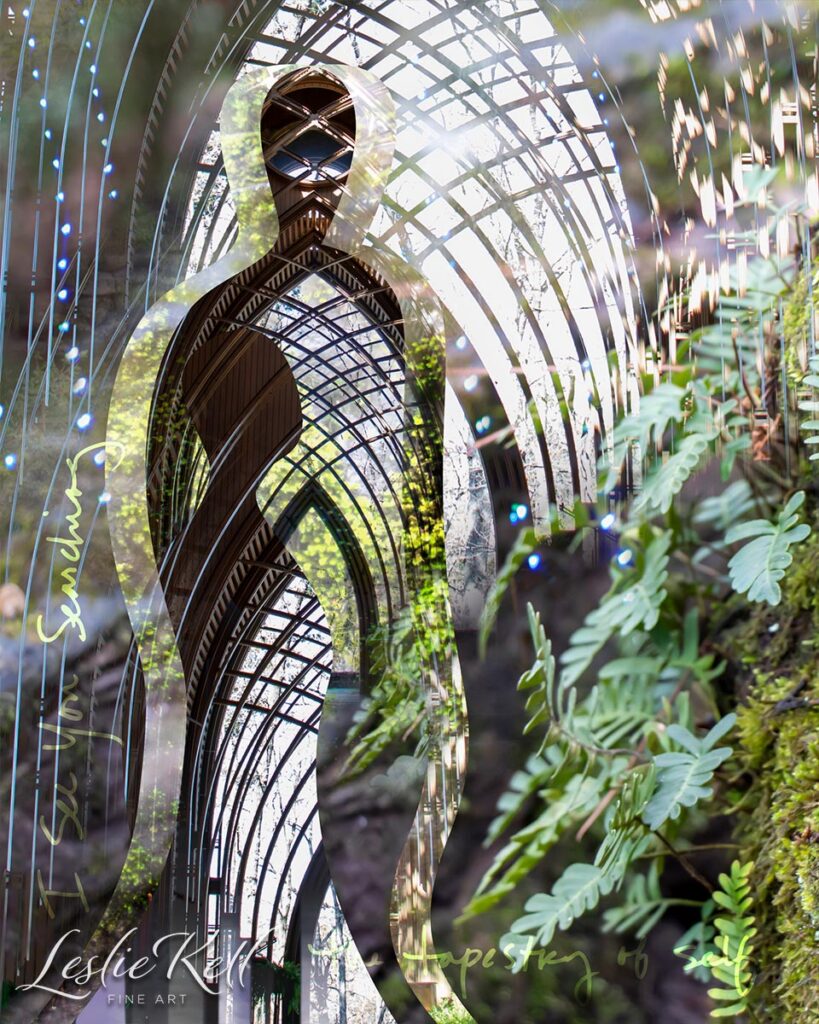
I photograph the places, objects, details, reflections, textures, and moments that catch my attention, and those photographs become the raw material for my artwork. Unlike traditional collage, however, I am not cutting photographs apart and altering them into something unrecognizable. The photographs remain remarkably true to what I encountered. Their compositions remain recognizable, and the colors, textures, light, and physical qualities of the original subject are still there.
That matters to me.
Because the artwork is built from photographs of real places and real things, there is often a familiarity to the finished image, even when the overall composition feels surreal or impossible. You may not immediately know what you are looking at, but something about it feels recognizable. I think that tension between the real and the imagined is part of what gives my work its sometimes unsettling quality.
The photographs are not illustrations of an idea that I invented afterward. They are pieces of the real world that I have encountered and collected over a lifetime of looking.
The Drawings Matter
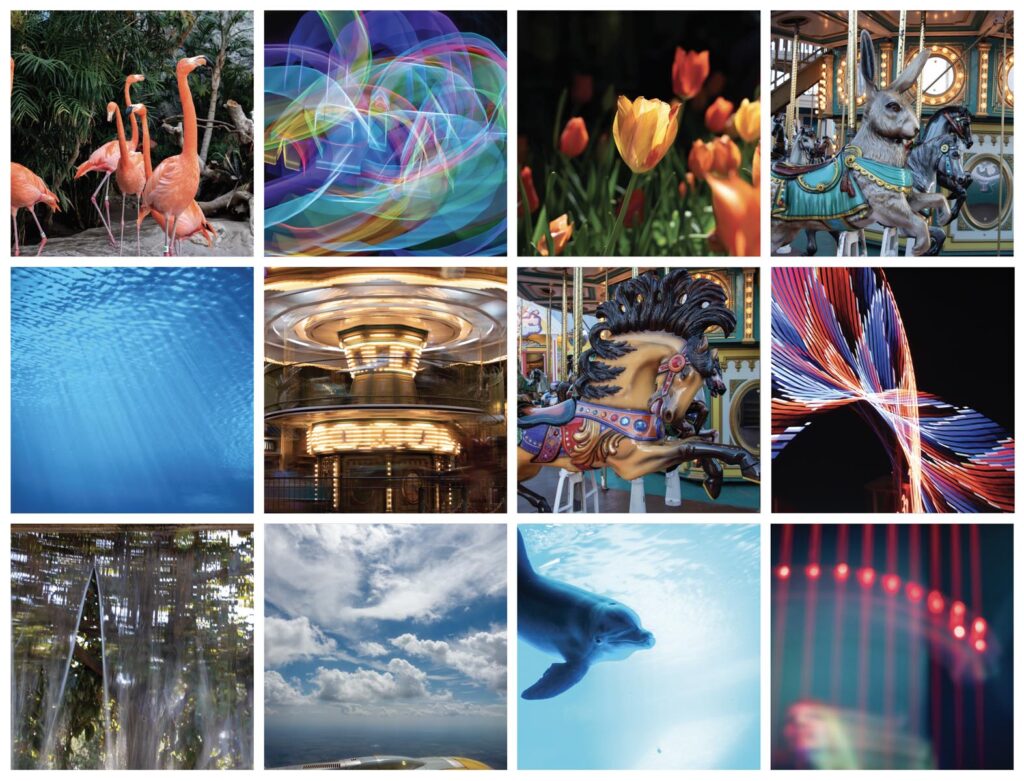
Although I describe my work as digital art, drawing and design remain an essential part of my process. I use digital drawing tools much as I once used pencil, ink, paint, and brush, building lines and shapes and making decisions about what belongs together, what needs to disappear, what should connect, and what needs to be reinvented through the composition. Digital tools give me an extraordinary amount of flexibility, but they don’t make those artistic decisions for me; I am still composing, editing, experimenting, getting things wrong, starting over, and looking at an image until I know that something isn’t right yet. The entire composition hinges on the drawing being right. If the drawing doesn’t work, the piece doesn’t work, no matter how beautiful the photographs or other elements may be.
The Poetry Behind the Images
There is another part of my process that began long before digital art: poetry.
I have reams of poems that I wrote when I was young. For years they sat in notebooks and boxes, representing a form of expression I had largely moved away from as my career took me into illustration, graphic design, photography, and eventually digital art.
Coming back to poetry has been one of the unexpected gifts of this chapter of my life.
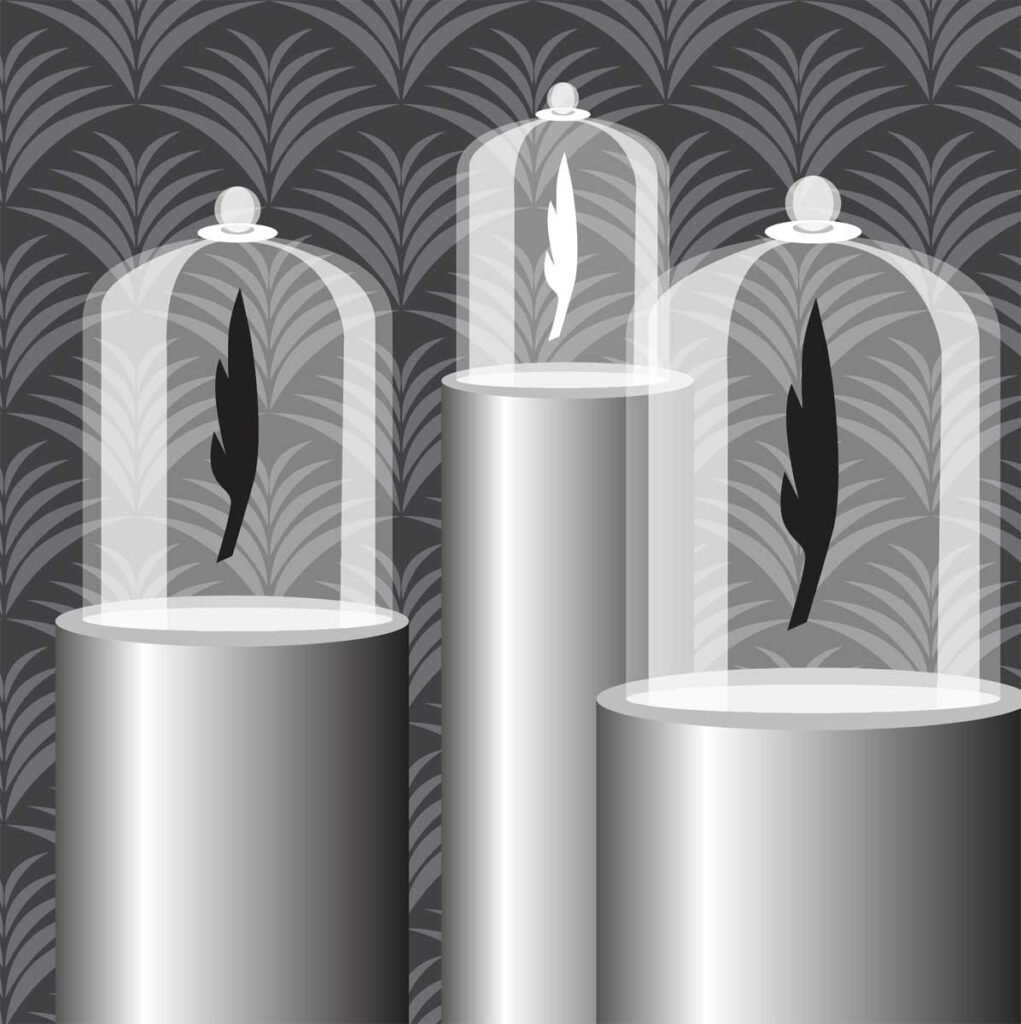
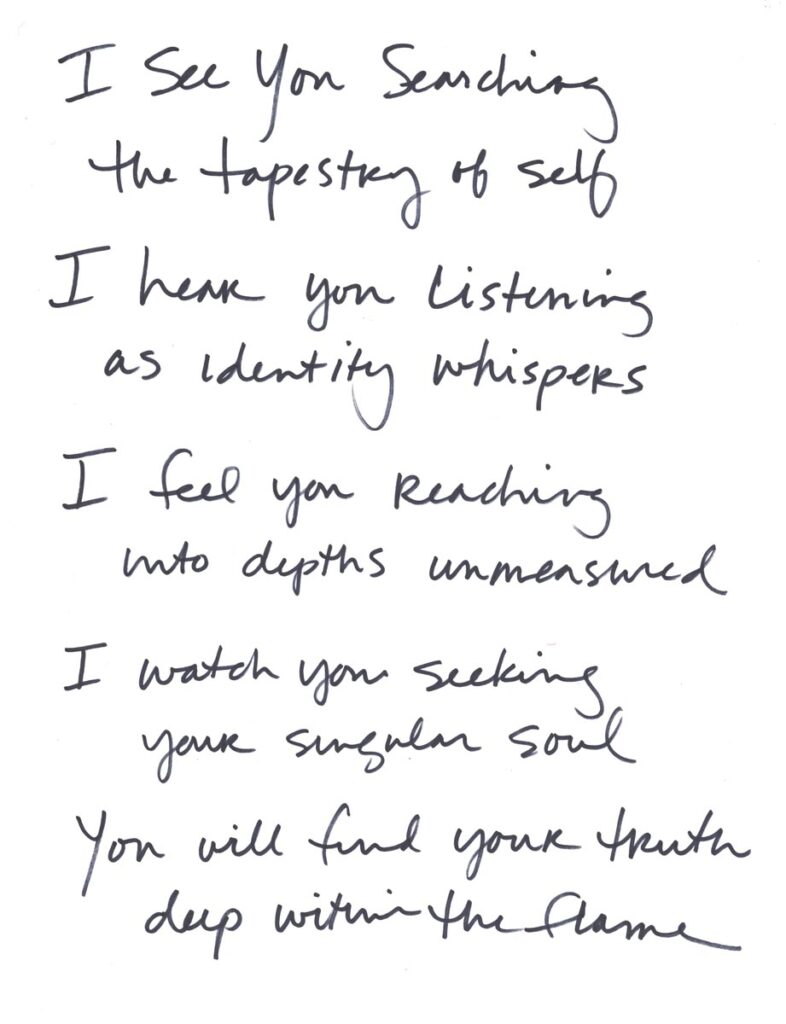
Many of my collections begin with a poem, or with an idea that develops through writing. The words give me a place to begin thinking about the emotional landscape of a body of work, and sometimes the titles of individual pieces emerge directly from lines or phrases in those poems. The imagery and the writing then begin to inform one another.
It feels surprisingly natural to return to something I was doing as a young person and bring it into the work I make today. The technology is completely different, but the impulse is remarkably familiar: to take something I feel or see internally and find a way to give it a visual form.
No Generative AI
I want to be particularly clear about one distinction: none of my artwork is generated by artificial intelligence.
I use professional digital tools, including Adobe Photoshop and Illustrator, but I use them to assemble my own imagery, drawings, and designs into a finished composition. I am not asking software to invent the imagery for me, and I am not using generative tools to create or replace elements within my work.
There is an important distinction between software generating an image and an artist using software as a tool to construct an image from their own materials. My process belongs entirely to the latter.
The computer is a tool. It doesn’t make the creative decisions.
That distinction matters to me because so much of my work is about memory, perception, place, and personal experience. The images have a connection to something I have actually encountered, photographed, drawn, written about, or imagined. Even when the final artwork takes us somewhere impossible, its origins remain tangible.
No Stock Photography or Video
The same principle applies to photography and video.
I don’t use stock photography or stock video in my artwork.
When you see a landscape, reflection, architectural element, object, or moving image within my work, it originated with me. The photographs are mine, the video is mine, and the visual elements I draw and design are mine.
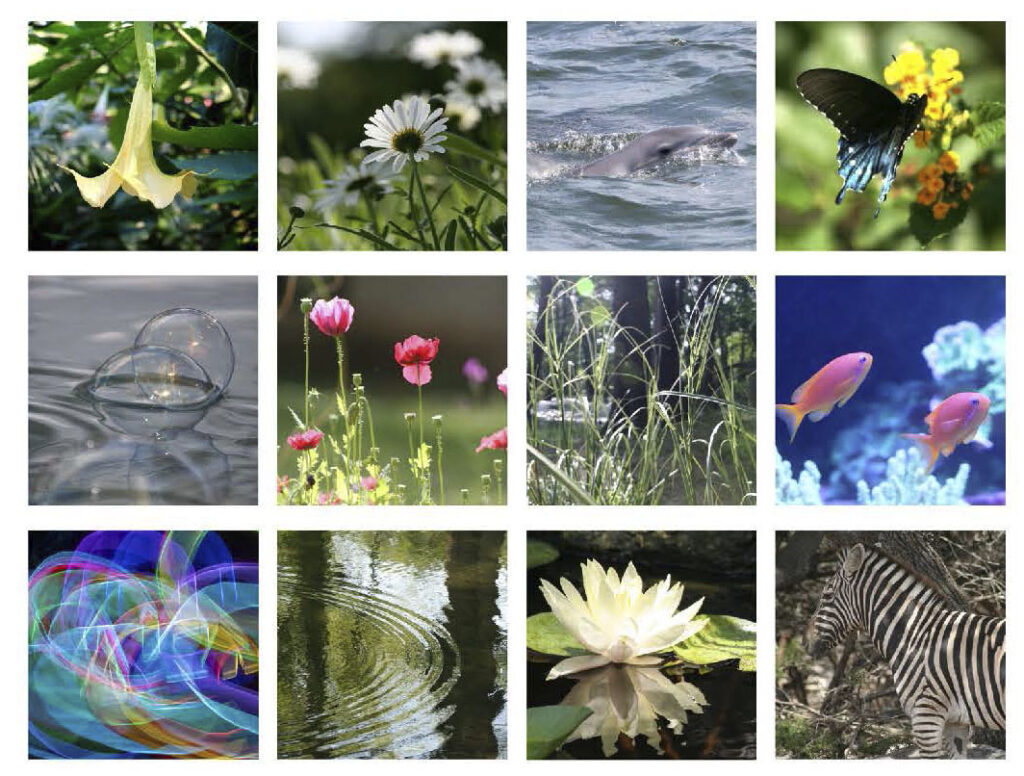
The finished artwork may combine those elements in ways that could never exist in the physical world, but I don’t need to invent a landscape, generate an object, or search a stock library for the right reflection. I already have a personal library of images gathered through years of looking, traveling, photographing, and paying attention.
That connection to a real place, a real moment, or something I have personally observed is important to the work. It is part of what gives the finished images their sense of familiarity.
Digital Doesn’t Mean Impersonal
I think there is another misconception worth challenging: that digital art is somehow less personal because it is made with technology.
For me, it is quite the opposite.
I make the same kinds of decisions I would make if I were standing in front of a canvas. I consider composition, balance, color, rhythm, scale, movement, light, texture, and emotion. Those decisions come from my experience, my intuition, my memory, and my imagination—not from the computer.
The technology simply gives me another way to bring those things together.
And that is what I love about working digitally. I can bring everything I have learned from painting, illustration, graphic design, photography, writing, and decades of looking at images into a single piece of work.
I sometimes think about what would happen if I gave someone else exactly the same photographs, exactly the same drawings, and exactly the same instructions for how I work. They could follow the process step by step and still arrive somewhere completely different. The decisions that make the work mine aren’t contained in the software or even in the individual elements. They happen in the thousands of small choices that shape the final composition.
That is the part that can’t be automated.
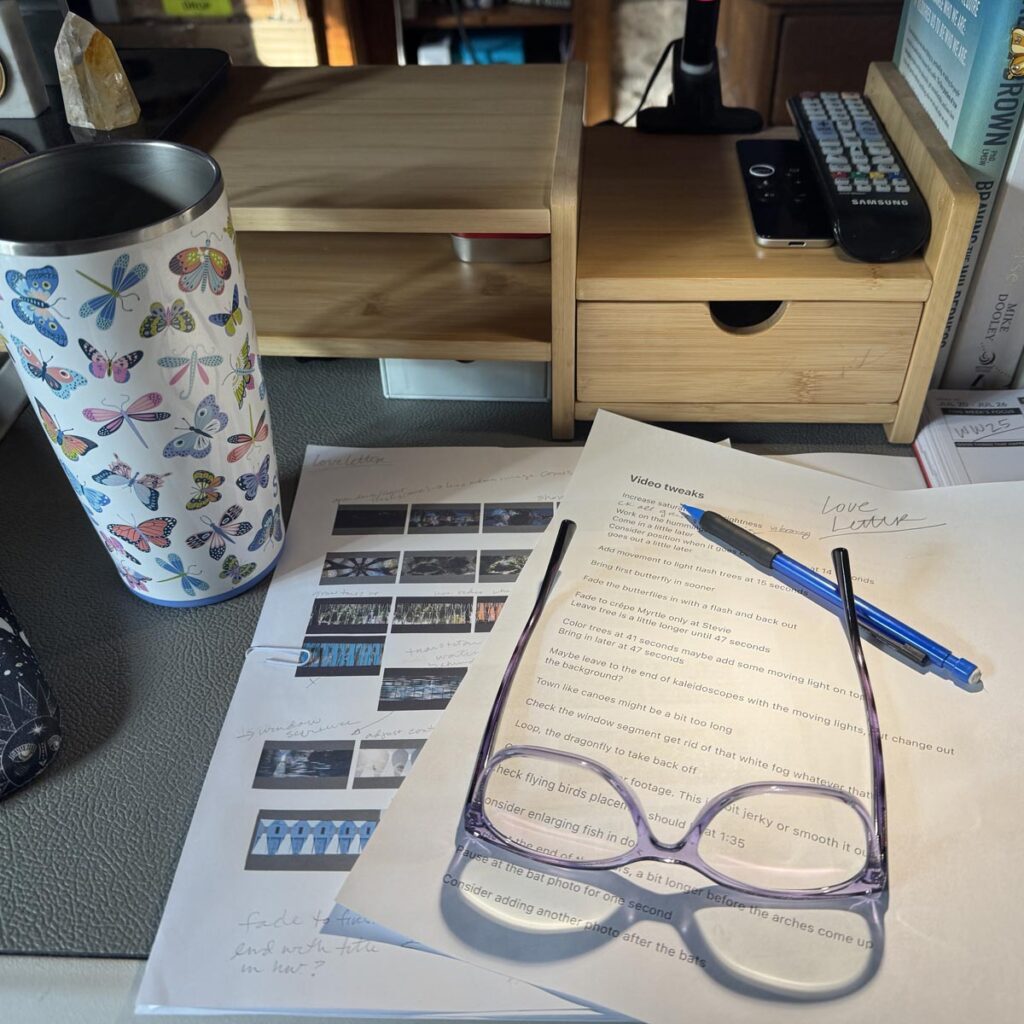
The Long Way Around
Looking back, my path makes more sense than it probably did while I was living it.
Painting taught me to see and to understand color and composition. Illustration taught me to draw and to tell stories through images. Graphic design taught me how to construct and organize visual information. Photography taught me to pay attention to the world around me. Writing and poetry gave me another way to explore ideas and emotions. Digital art gave me a way to bring all of those things together.
More than three decades of working with images have become part of the way I see and make. My current process may happen on a computer, but it is built on a lifetime of traditional artmaking, observation, experimentation, and visual problem-solving.
So yes, my artwork is digital, but there is nothing automatic about it. Every photograph begins with something I have seen. Every drawing begins with my hand and my eye. Every composition is built through a long series of personal decisions, and every finished piece carries something of the person who made it.
Digital is simply the medium I use to make it.
And for me, that doesn’t make the work less human. It is simply another way of being an artist.
