Precious explores the human instinct to assign meaning, preserve significance, and elevate the familiar into the symbolic. Through themes of memory, nostalgia, folklore, superstition, and perception, the collection examines how we construct value and why certain objects become larger than themselves.
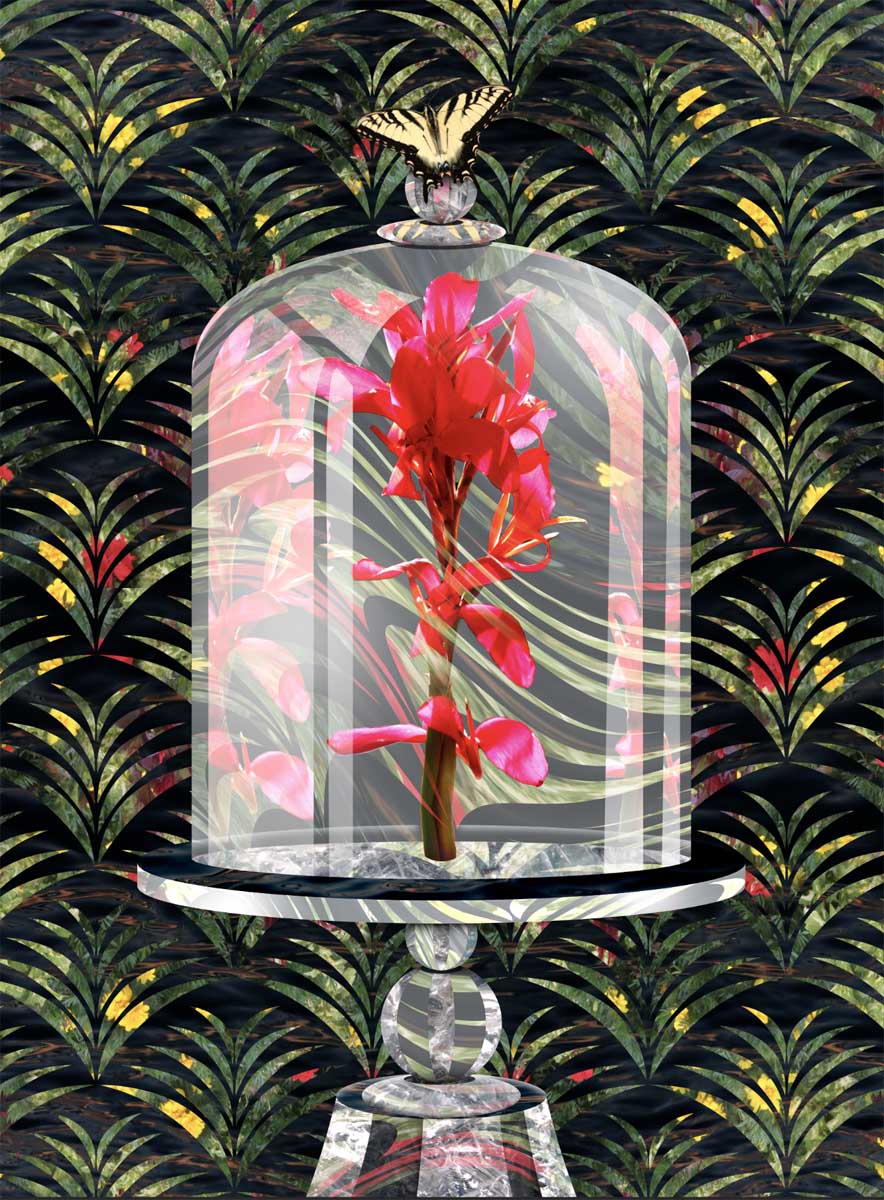
Each work is built from three primary elements. The first is the vessel: a glass dome, shrine-like structure, or display intended to evoke preservation, reverence, and museum-like presentation. The second is a custom-designed wallpaper, developed specifically for the series. These ornamental environments provide context and atmosphere, influencing how the objects within are perceived. The third element is the object beneath glass: keepsakes, relics, natural specimens, symbols, antiquities, and invented forms that invite interpretation while resisting fixed meaning.
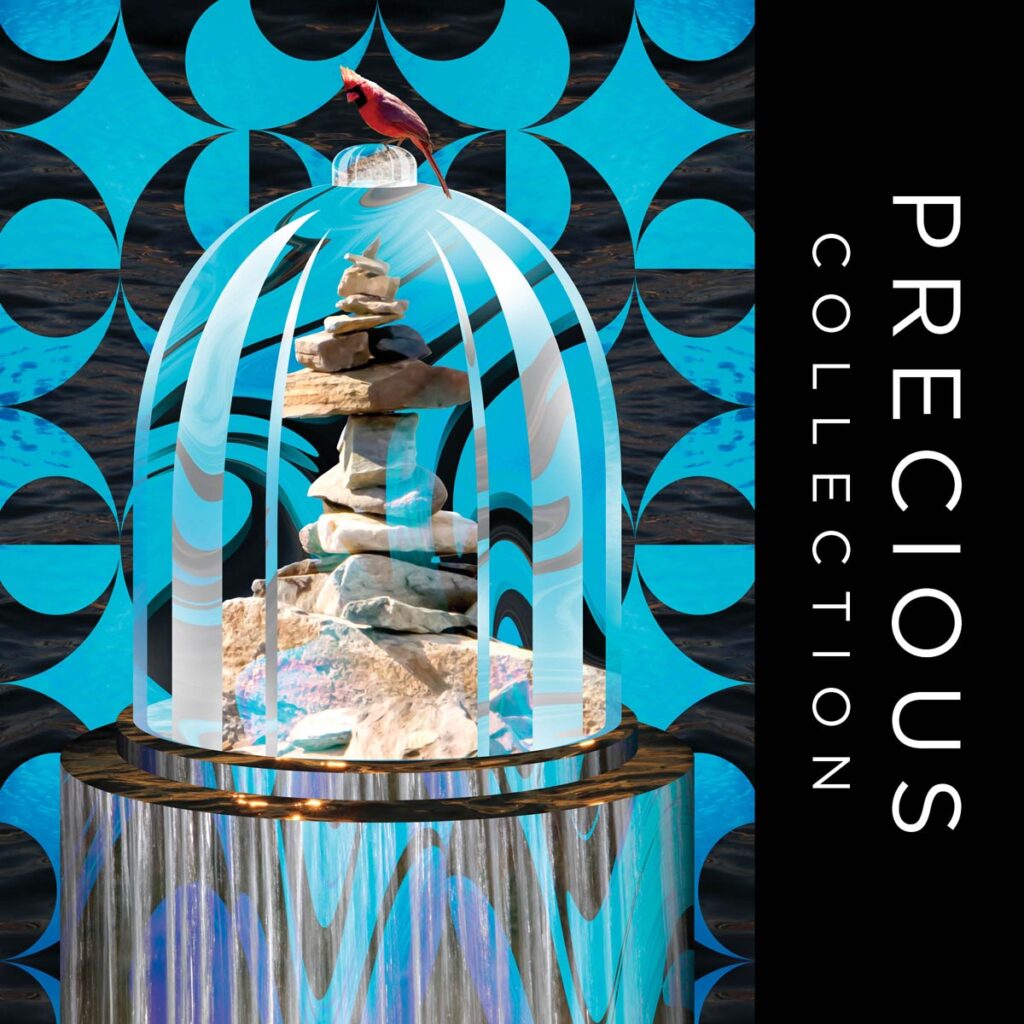
Many pieces also include birds, butterflies, and other creatures positioned outside the vessels. These visitors introduce an additional layer of implied symbolism, suggesting themes of transformation, memory, spirituality, luck, hope, and observation. Their meanings remain intentionally open-ended, allowing viewers to bring their own experiences and associations to the work.
As with many of my collections, Precious is guided by an original poem that serves as its conceptual narrative. The poetry is not an afterthought but an integral part of the creative process. It provides a framework for the questions explored throughout the series and supplies the titles for each artwork. Together, image and language create a dialogue about what we hold precious, why we hold it, and how meaning itself is constructed.
At its heart, Precious asks a simple question: What would you place beneath glass?
Explore the creative journey that this collection emerged from below…
THE BEGINNING
The foundation of Precious is perception.
I’ve been thinking deeply about what we hold precious — how we assign iconic status and value, and how presentation influences belief. What elevates an object? Why does one form feel sacred while another feels ordinary? How much of “importance” is inherent, and how much is constructed?
There is also the human tendency to assign meaning when we don’t understand something. When faced with ambiguity, we reach for interpretation that sits safely within our comfort zones. We project narrative. We impose symbolism. We fill the gaps.
Precious lives inside that psychological reflex.
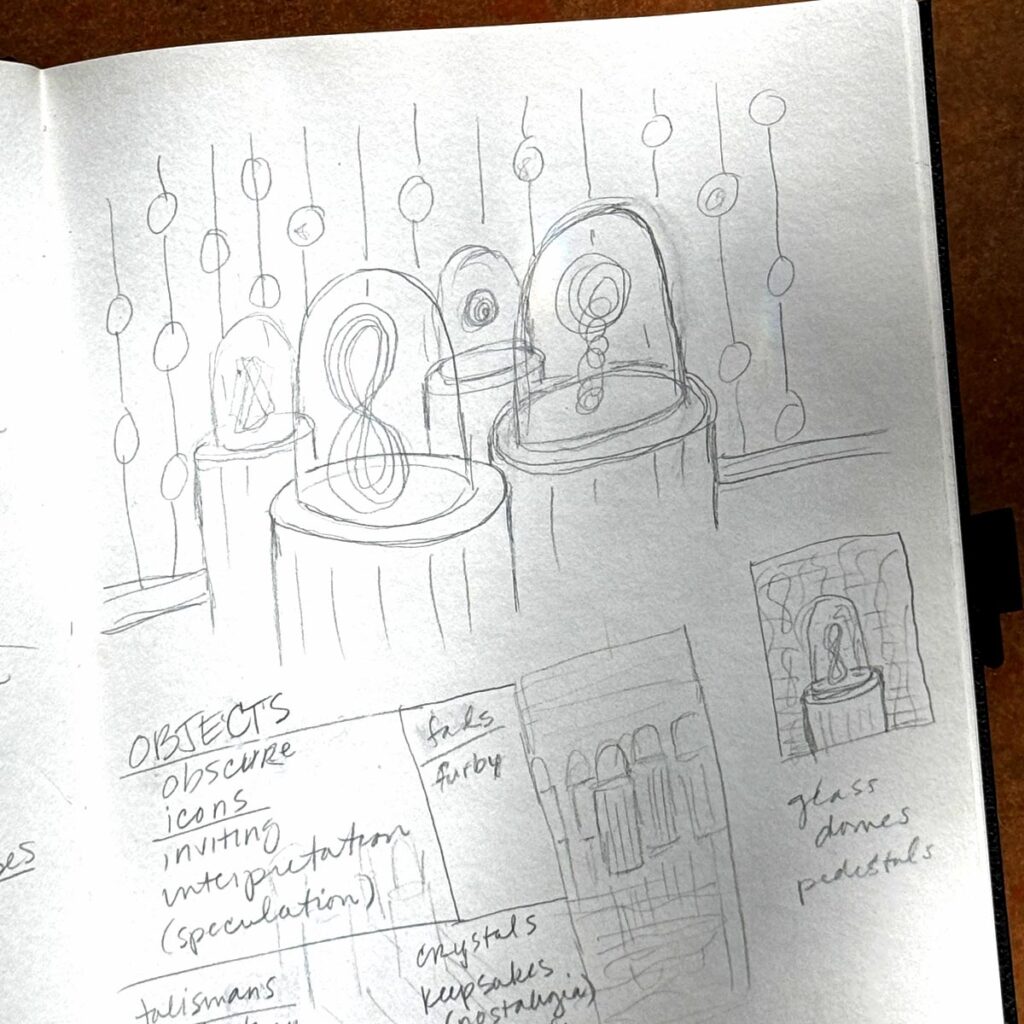
Visually, the work developed around elevated environments — surreal, museum-like roomscapes. Pedestals. Glass domes. Shrine structures. Objects isolated and framed as if they belong to history.
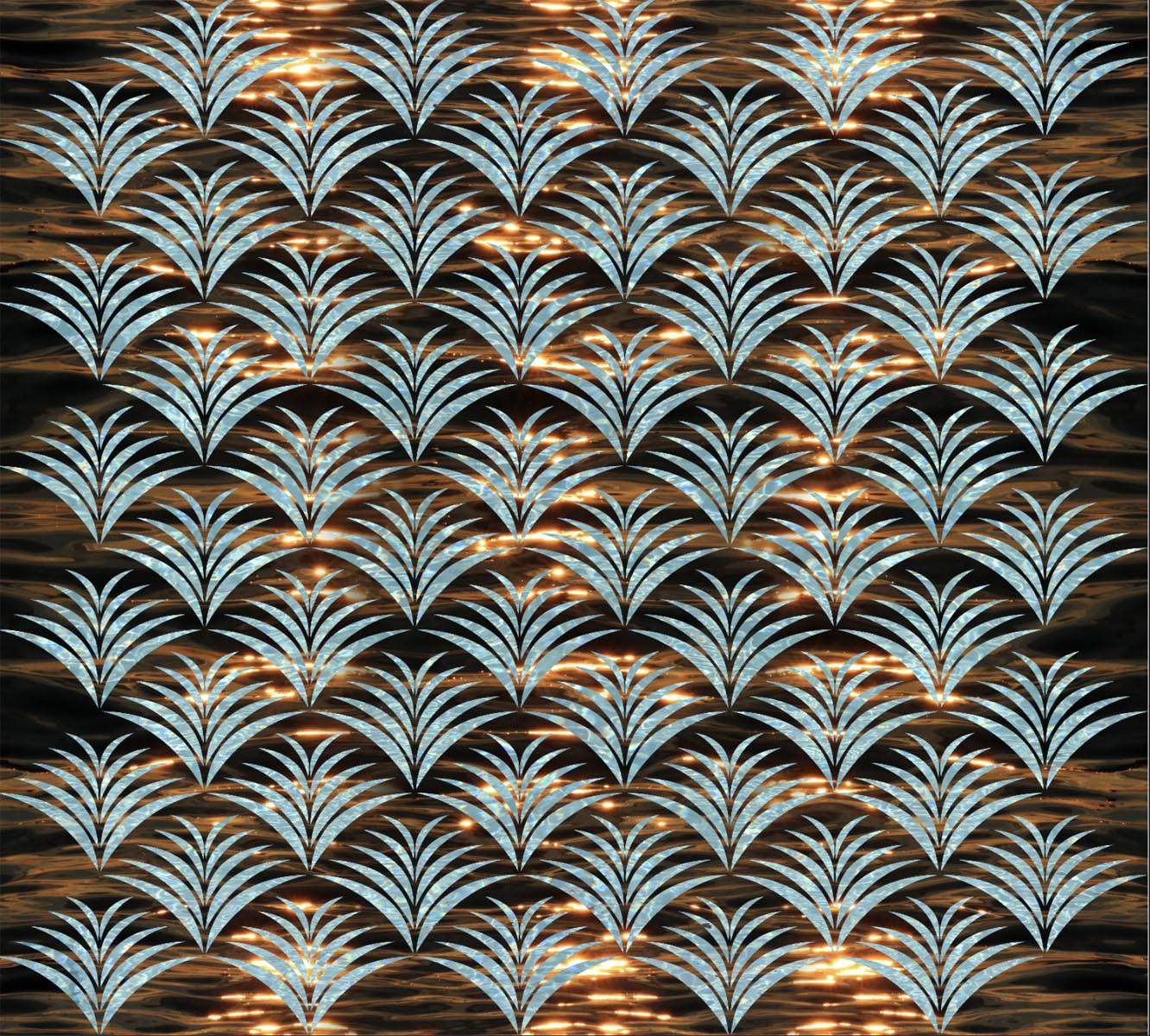
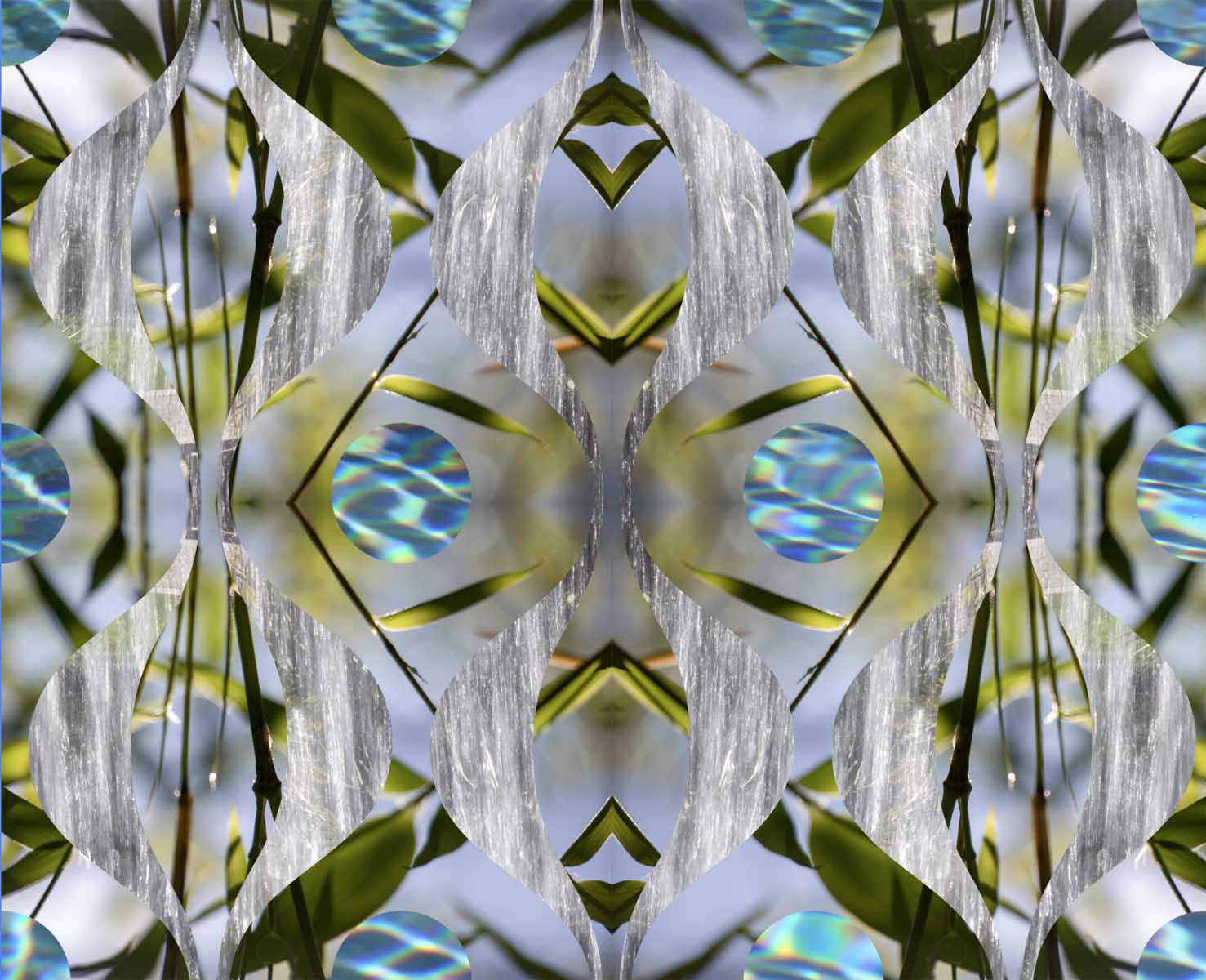
The backgrounds take the form of elaborate wallpapers, referencing antiquities and decorative traditions. Pattern becomes atmosphere. Repetition becomes authority. The environment itself begins to signal importance before the object even speaks.
If something is displayed reverently enough — do we begin to revere it?
CONCEPT / RESEARCH PHASE
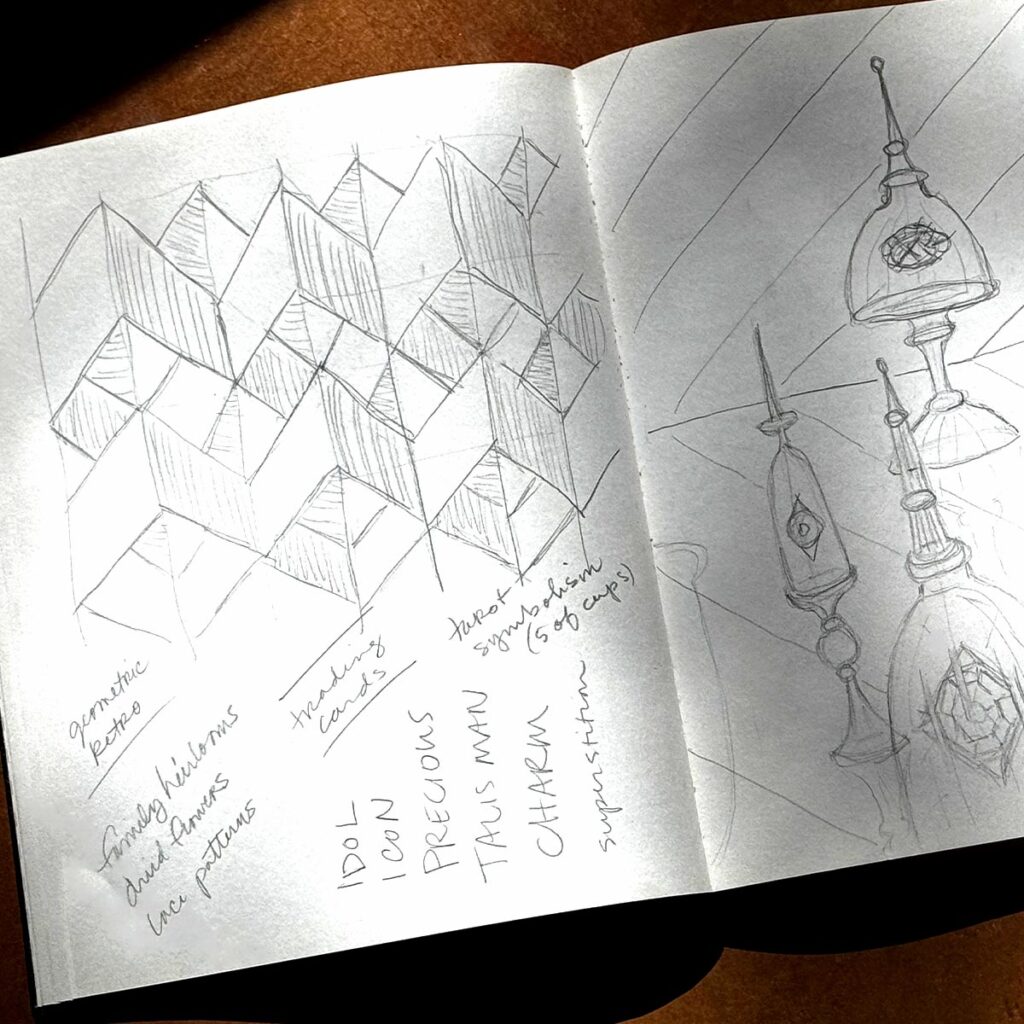
As usual, the process began in the sketchbook — journal entries, questions, fragments of language.
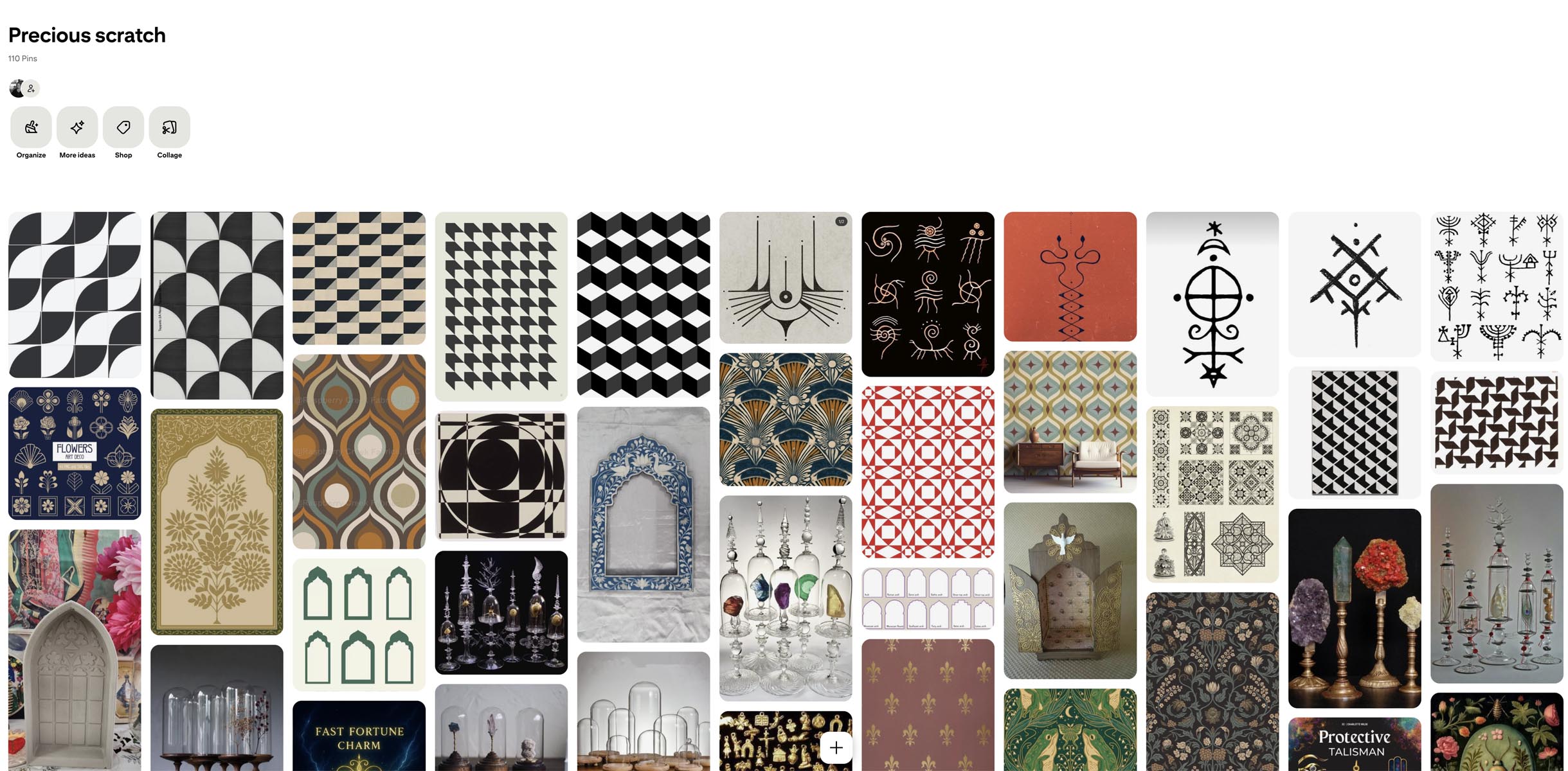
But for this series, research extended heavily into digital space. I began building Pinterest boards focused on historical wallpaper, ornamental motifs, antique interiors, museum displays, and Victorian patterning. I was studying how repetition and ornament have historically communicated status, taste, and permanence.
Scrolling became a form of visual analysis.
Some patterns translated beautifully into my visual language. Others felt overly decorative or ironic. The balance needed to feel immersive, not theatrical. Convincing, not camp.
I am still refining this vocabulary. The wallpaper designs continue to evolve as the series develops.
A SUPPORTING CATALYST
While the conceptual questions have been forming for some time, a small incident sharpened them.
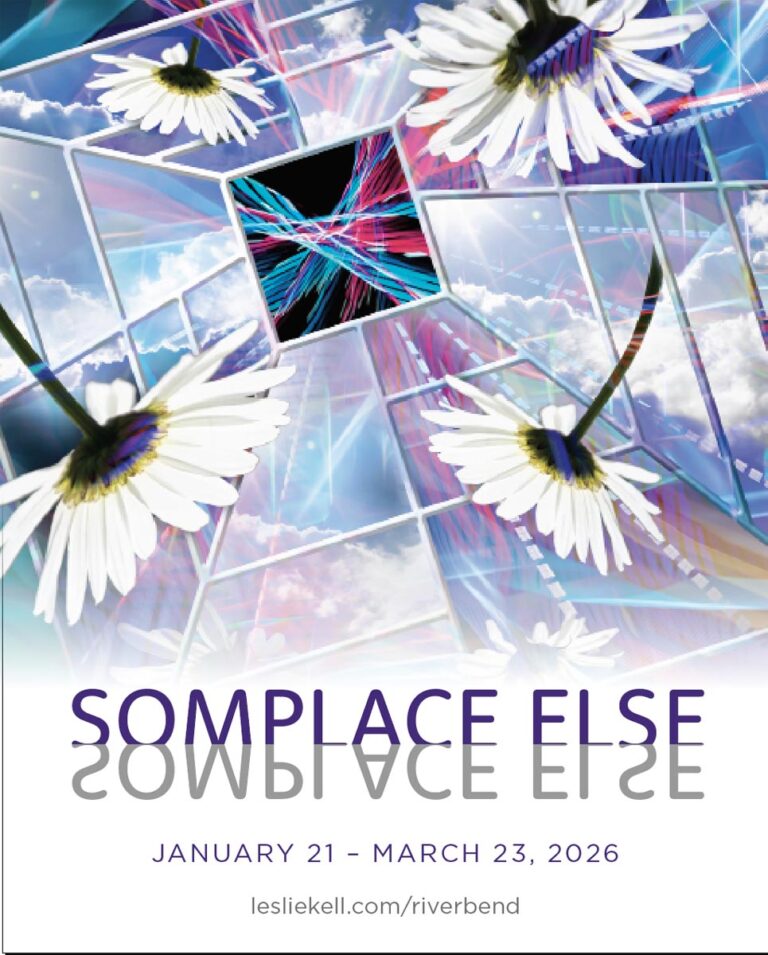
I designed the graphic for my solo exhibition at Riverbend and accidentally left the “e” out of Someplace.
No one noticed.
Or if they did, they didn’t say anything.
I kept staring at it, sensing something was slightly off. I reread it. Spellchecked. Adjusted spacing. Somehow I continued to miss the missing letter.
That experience unsettled me.
How observant are we?
How much do we actually see versus what we assume we see?
I was reminded of a social experiment where a clerk was swapped mid-interaction and the customer never noticed. Same uniform. Same general appearance. Different person.
We see what we expect to see.
That realization reinforced the direction of Precious. If perception is this fluid, what else are we collectively agreeing upon? What makes something read as an icon?
How much authority comes from presentation alone?
CREATIVE RETREAT
To push the ideas further, I stepped away.
I spent several days in solitude at Centerpoint on the Guadalupe River. Some parts of a series require immersion without interruption.
I wrote extensively — developing narrative threads and poetry around the concept. I began designing vessels, architectural frameworks, and symbolic forms. I refined wallpaper structures and compositional logic.
On the third morning, clarity arrived.
Eight solid drawings.
A poem.
And a spine — the conceptual direction anchoring the work.
The series is still expanding from that foundation.
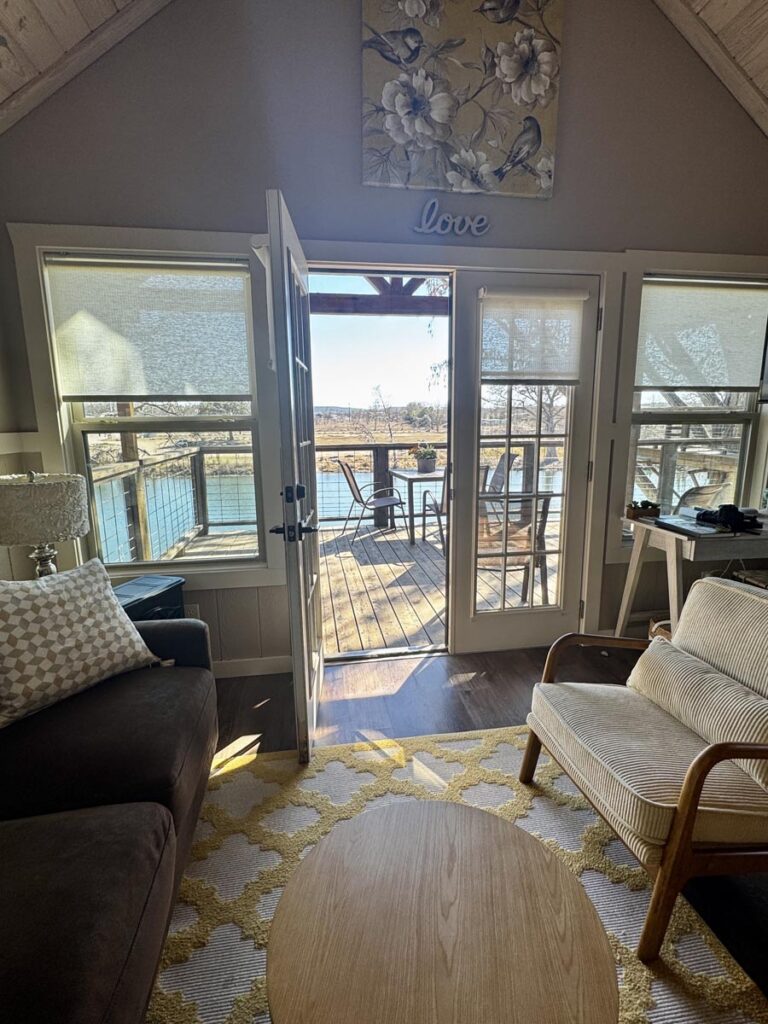
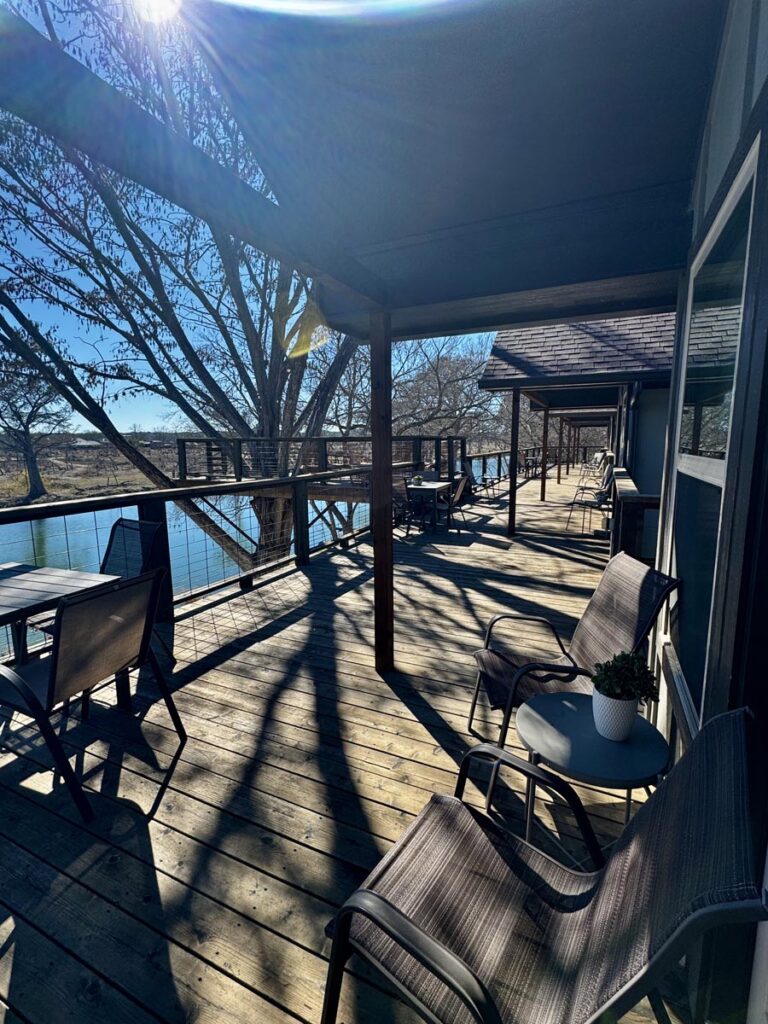
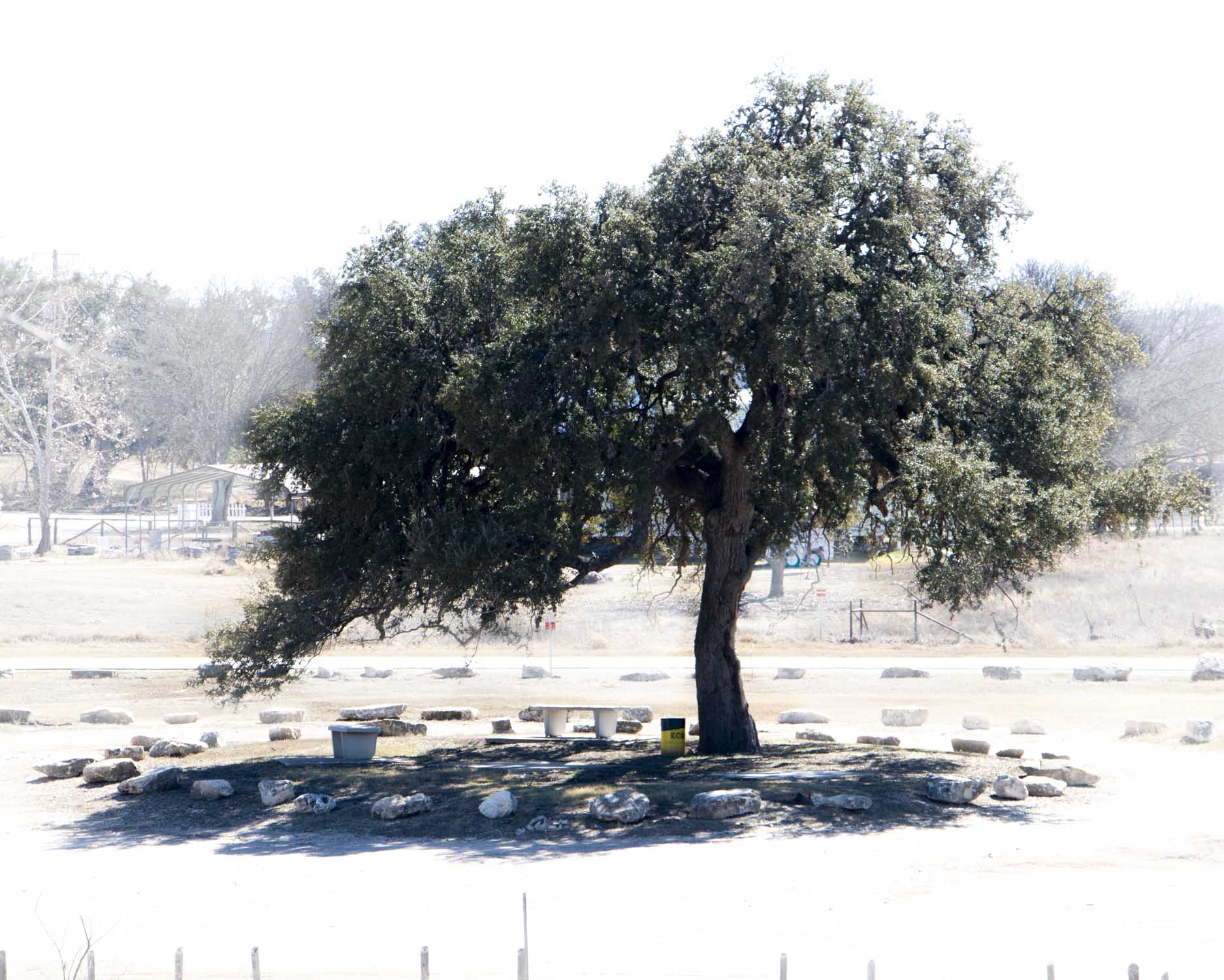
A few more photos from my stay on the river.
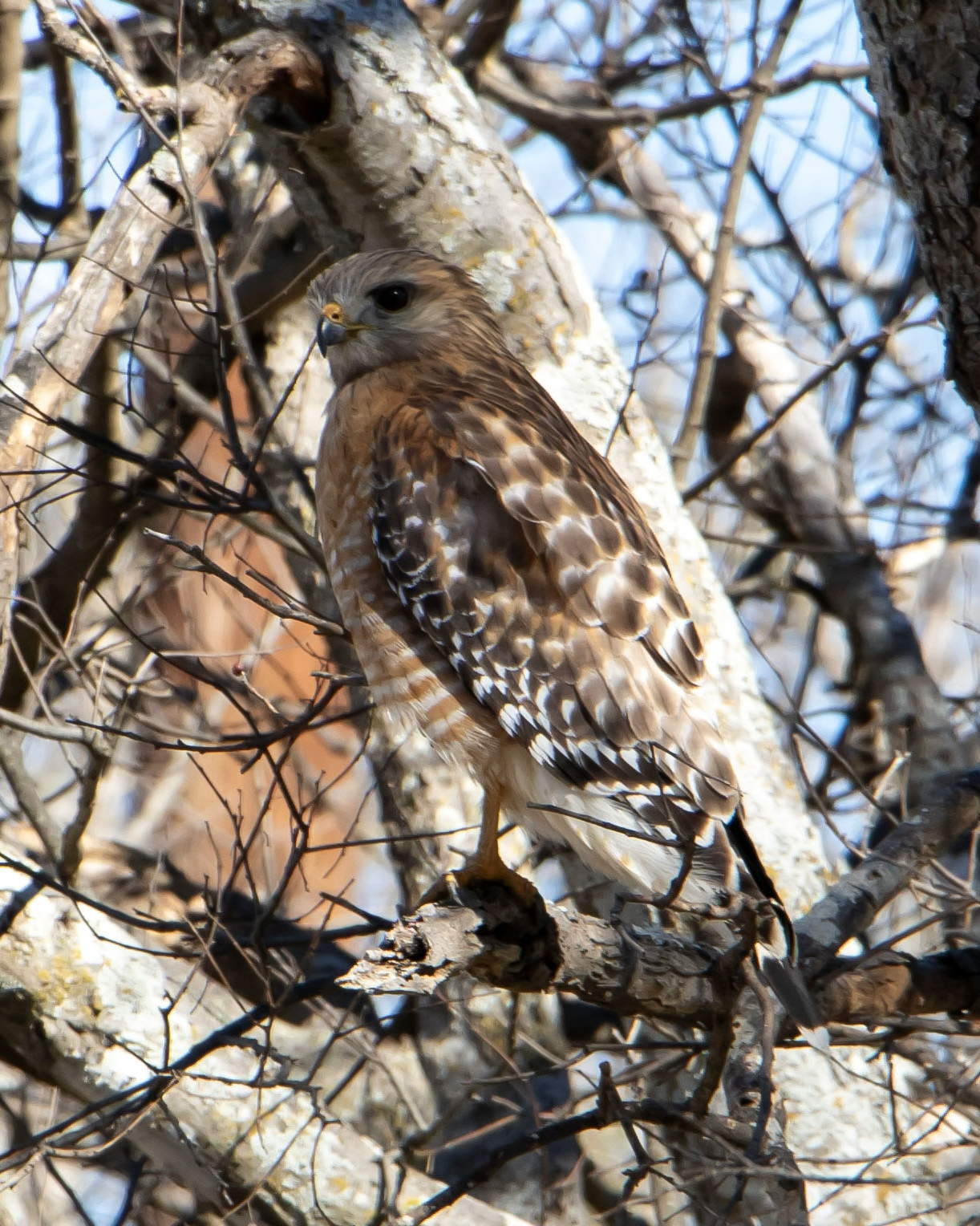
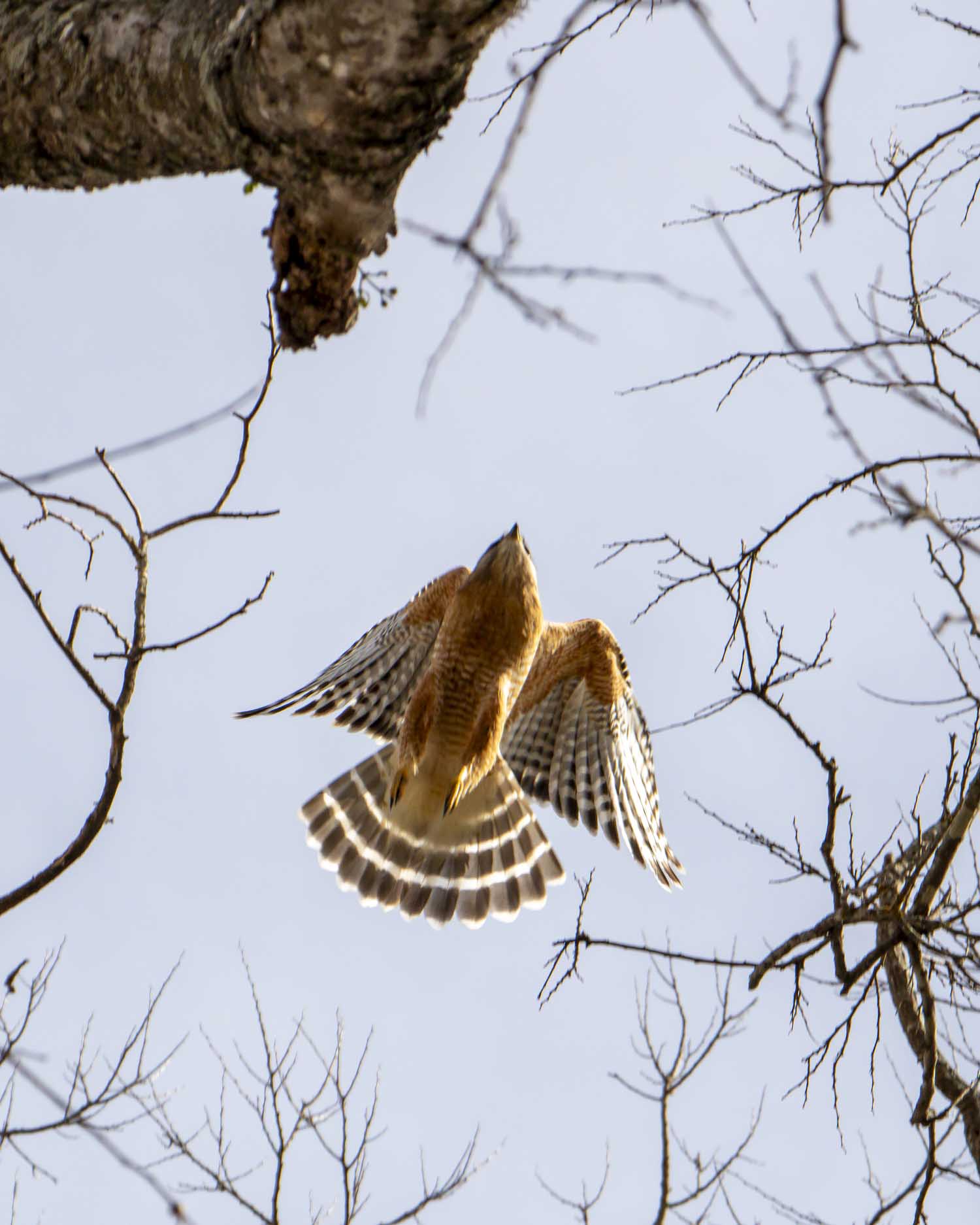
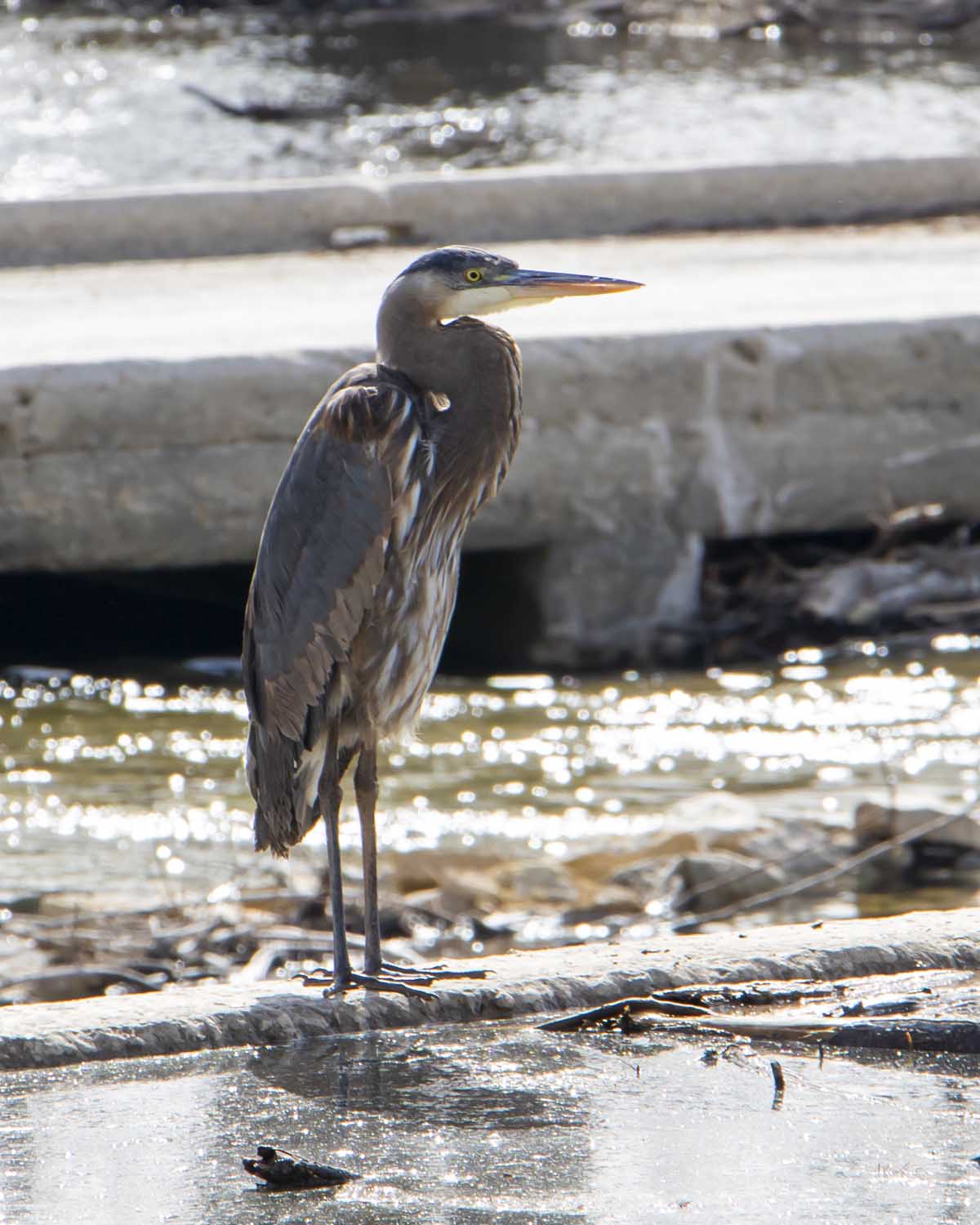
Within five minutes of arriving, a gorgeous hawk welcomed me. We crossed paths a few times during my stay — I captured the second photo on my last morning there, along with the heron (scroll).
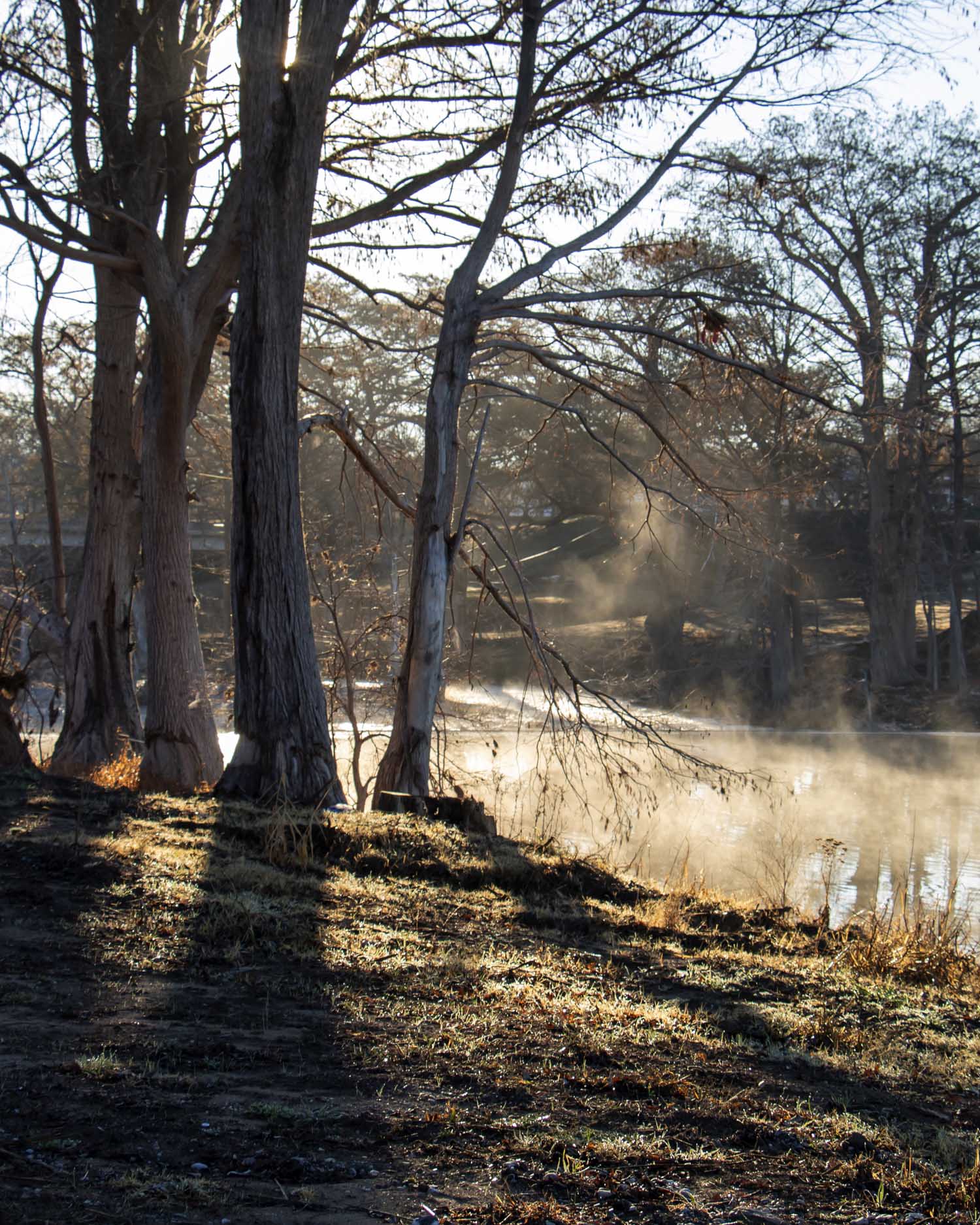
The fog on the river was mesmerizing. I shot video that morning too, and I can’t wait to share it.
This is a place I’ve returned to again and again over the years. It felt different this time. I hadn’t been back since last summer’s devastating flood, and the landscape still carries that memory.
Nature is working hard out there. You can see it in the new growth pushing through silt, in the quiet reshaping of the banks. I’m holding hope that spring brings the kind of renewal the river deserves.
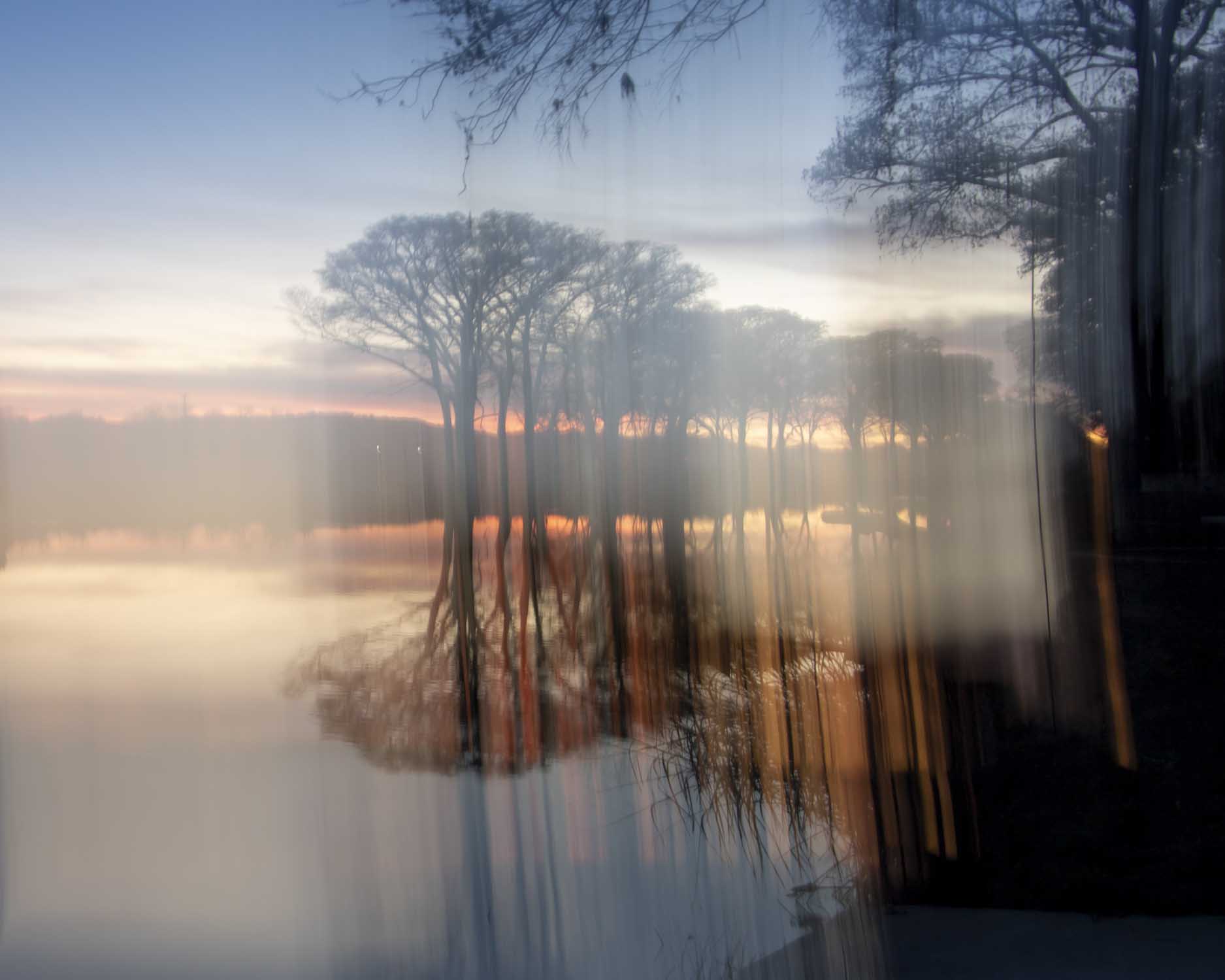
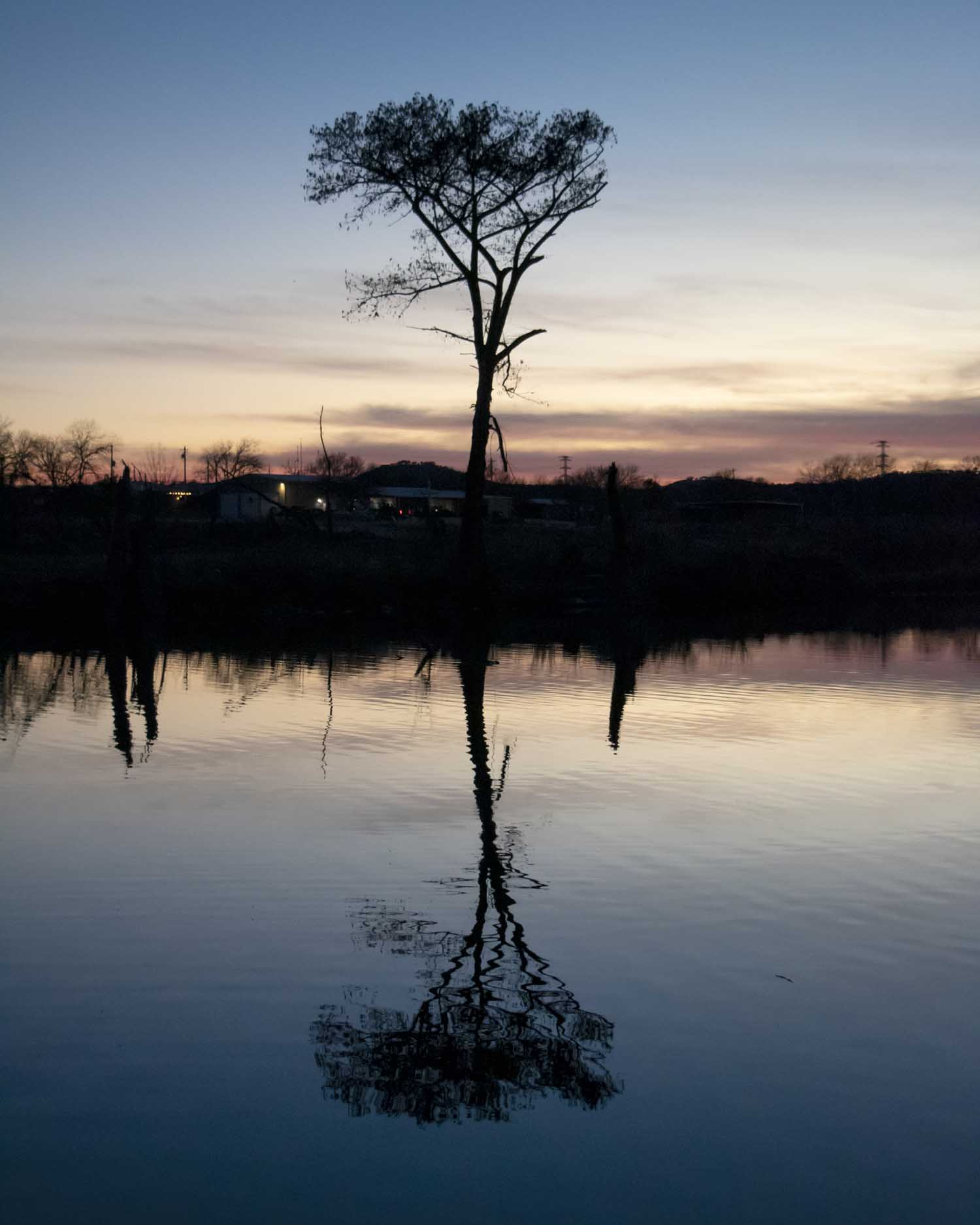
What hasn’t changed is the magic at sunset. The light still softens everything. The water still holds color like a secret. I spent the evenings experimenting with slow exposure light painting — small gestures of illumination against a landscape in recovery.
Lastly, the tree that breaks my heart. It’s clear how fiercely it fought to stay rooted in a current that swept nearly everything else away. I can’t decide if it makes me sad or fills me with hope. Maybe it’s both.
(If you’re looking for a getaway, I highly recommend TreeTop River Cabins)
PROSE PHASE
I’ve written poetry for as long as I can remember.
There are reams of handwritten pages tucked away — most of them written in my teens, most of them probably terrible. I don’t consider myself a poet in any formal sense. I assemble language the way I assemble images — intuitively, searching for resonance rather than perfection.
But poetry has become an integral part of my process again in recent years.
Nearly all of my bodies of work are organized into Collections, each anchored by a single original poem. That poem becomes the conceptual spine of the series. It is not written after the visuals — it develops alongside them, informing structure, atmosphere, and direction.
The poem serves as both compass and container.
From it, I extract the titles of individual works. Each title is mined directly from the language of the larger piece — fragments, phrases, single lines that carry weight. Sometimes that makes it difficult for me to recall a specific title out of context, but that is part of the architecture. The works are not meant to stand entirely alone; they are chapters within a larger narrative.
In Precious, the poem holds the inquiry.
The images respond.
It offers viewers another way into the work — a parallel path through meaning.
Precious
We hold it up to the light,
turn it over and under.
It’s what we don’t know
that beckons the wonder.
We search for a reason,
and conjure the why.
Guarding our touchstones
as the truth passes by.
It’s the thread that we grasp,
so delicately spun,
that tethers to knowing
when knowing is none.
We raise fragile walls,
and shelter in glass.
We crown our charms sacred,
as their powers amass.
The temples are veiled,
their thresholds unclear.
Our idols are vapor,
yet still we draw near.
–L. Kell
DESIGN PHASE
Precious is constructed from three primary components:
The Vessels
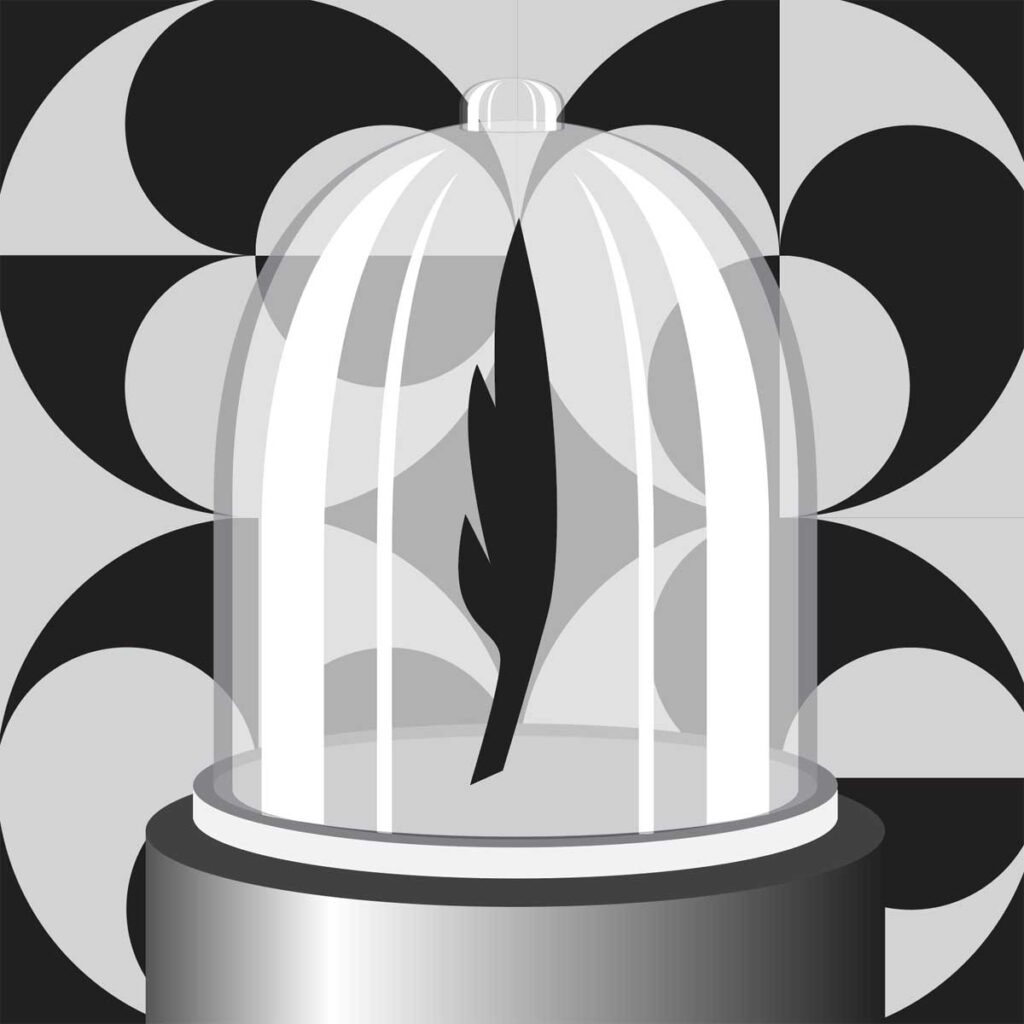
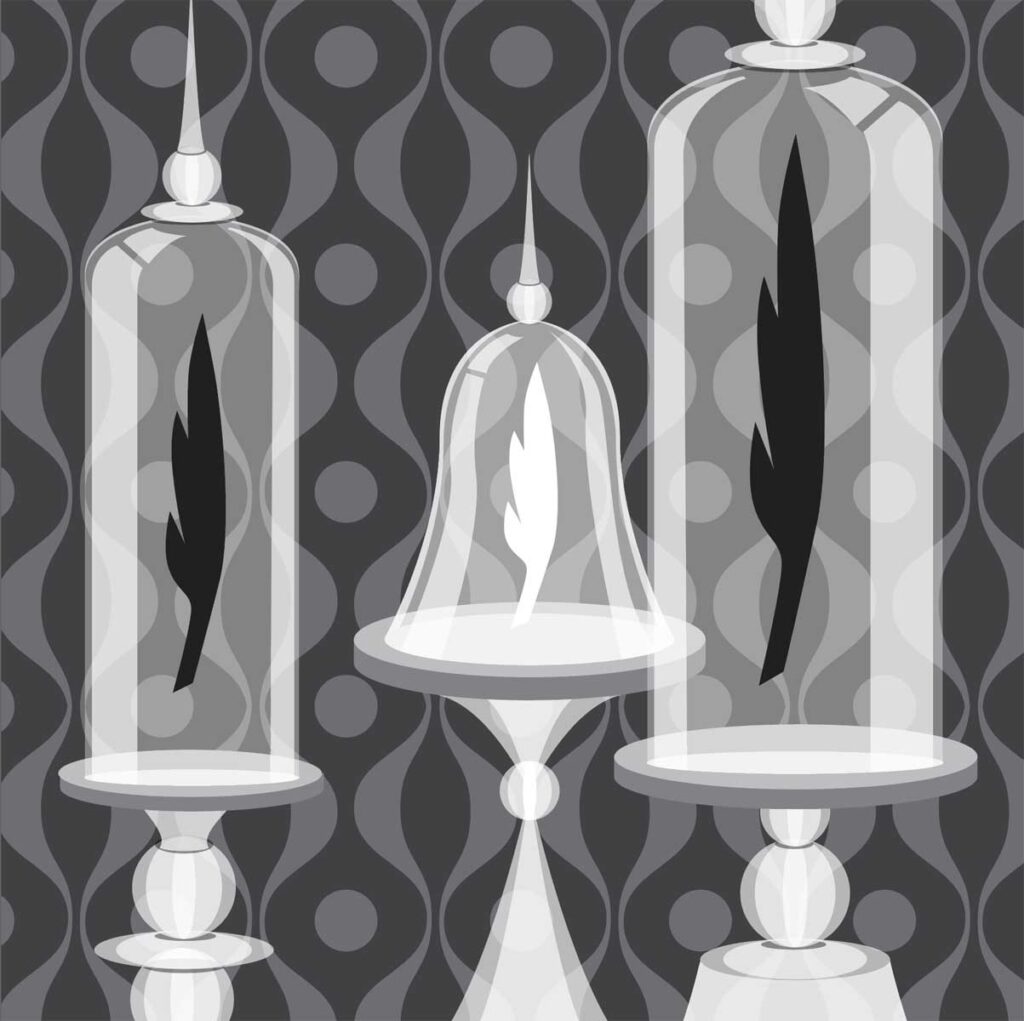
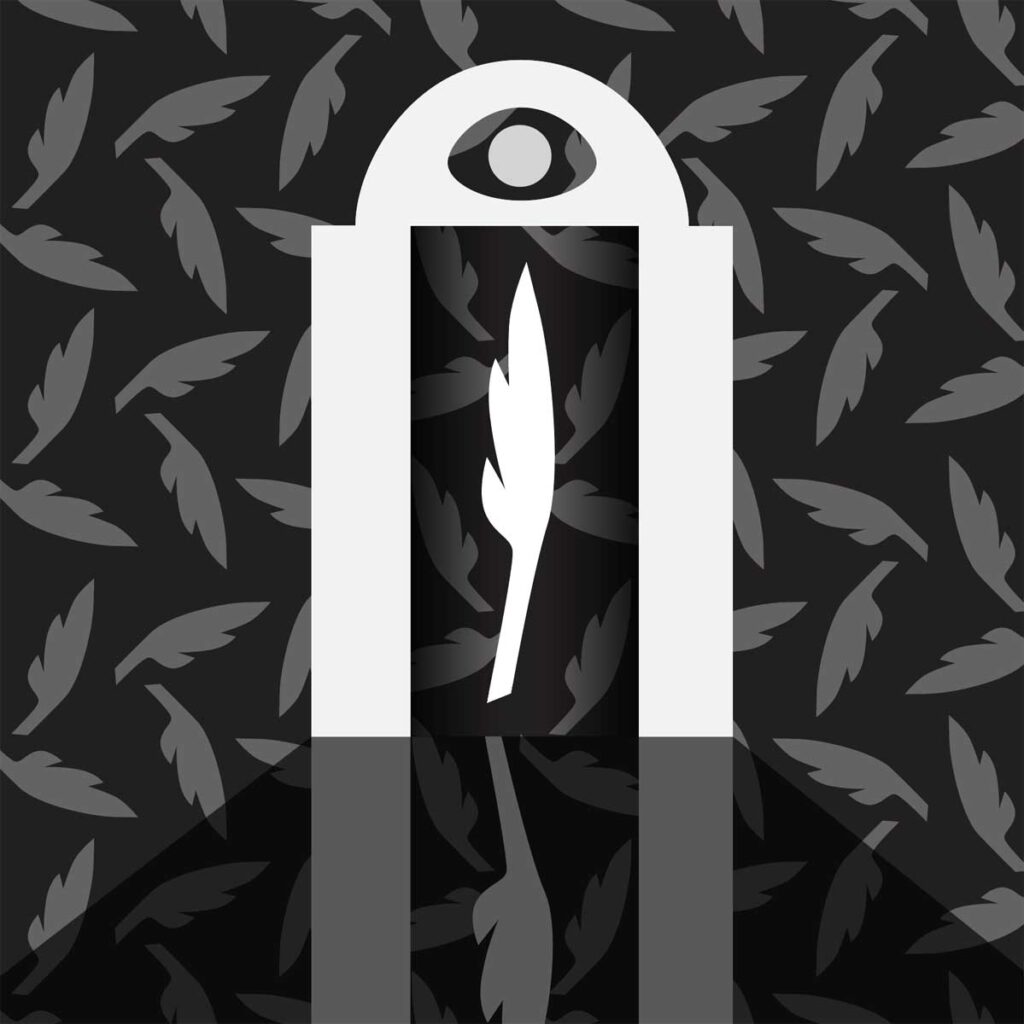
The vessels are shrine-like structures — surreal museum spaces intended to elevate whatever they contain. Pedestals, domes, architectural frames. They signal importance before meaning is assigned.
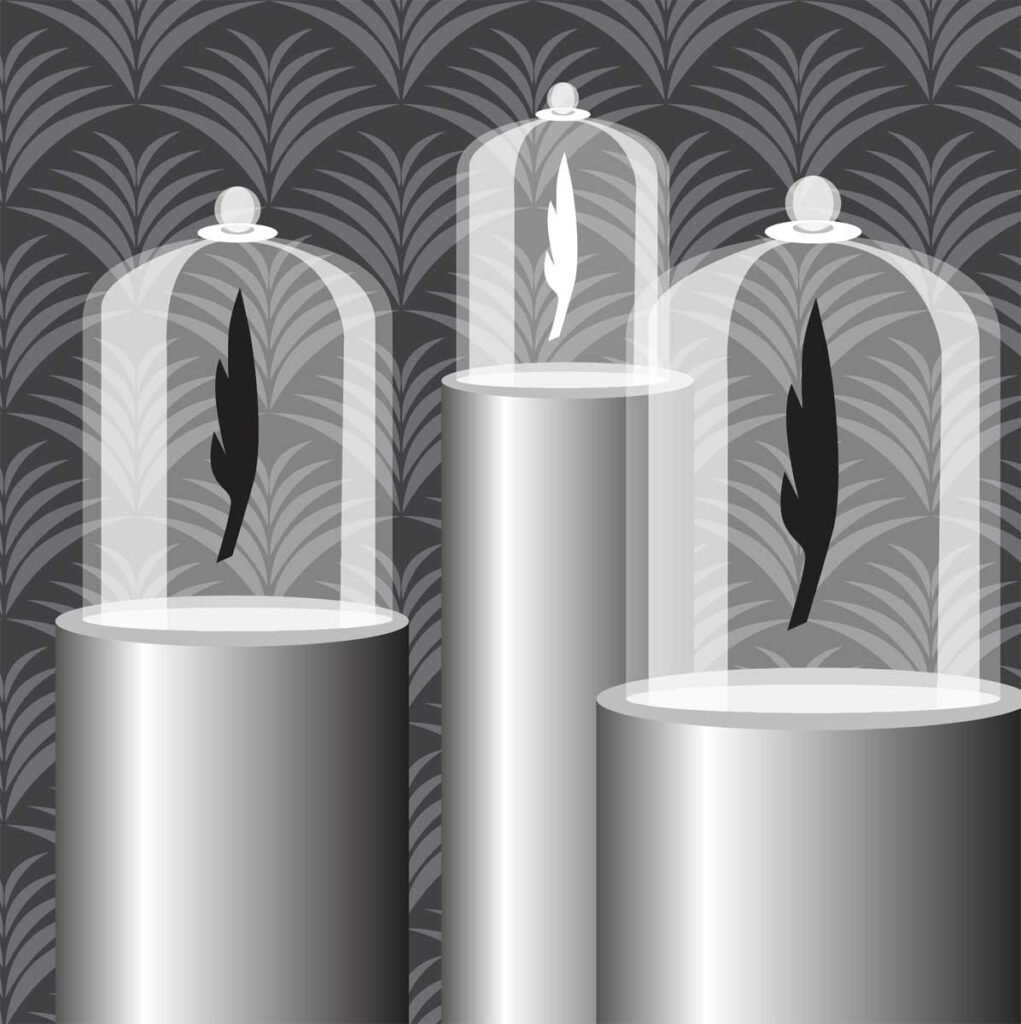
Here you can see where I start. These are the forms that I fold my photography into to create the final image. I work in black and white to establish contrast and design flow. It keeps me focused in later phases.
To avoid disappearing into endless options too early, I began with a simple feather sketch to fill the spaces.
The Wallpapers
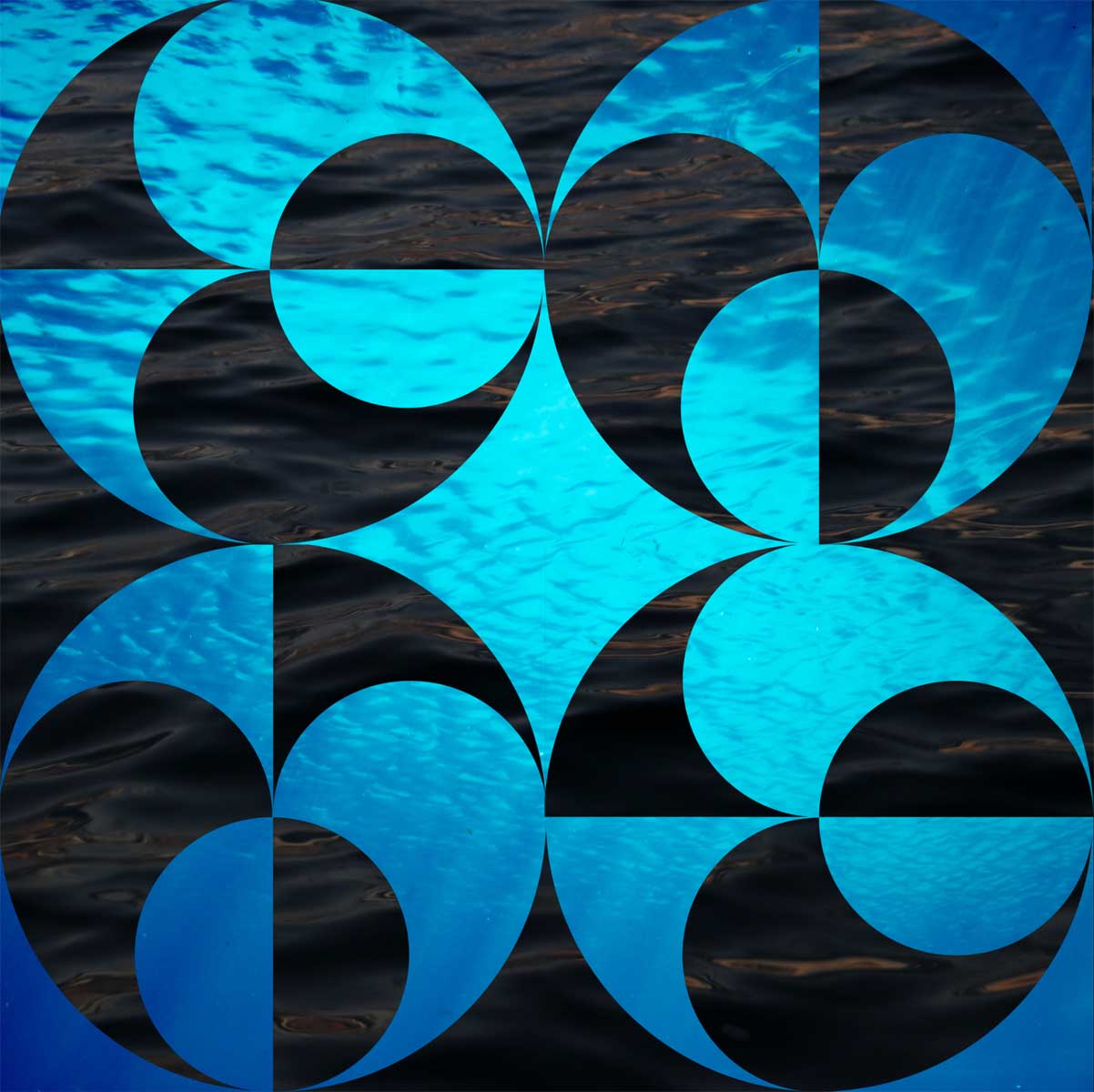
Wallpaper becomes environment — cultural and aesthetic context rendered decorative. These patterns reference antiquity and domestic interiors simultaneously, suggesting lineage, preservation, and inherited value systems.
There are many designs still in development. The environment continues to shift as the work progresses.
The Icons
The most expansive component is what lives under glass.
As I mentioned, I began with a simple feather — open-ended and symbolically flexible. But the possibilities multiply quickly:
Tension: waterlines, bubbles, hummingbirds in flight
Nostalgia: teacups, childhood objects, statuaries
Ritual: totems, relic-like forms, crystals
Symbolic: flowers, butterflies, birds
Each object carries embedded meaning. The question becomes: am I uncovering significance — or manufacturing it?
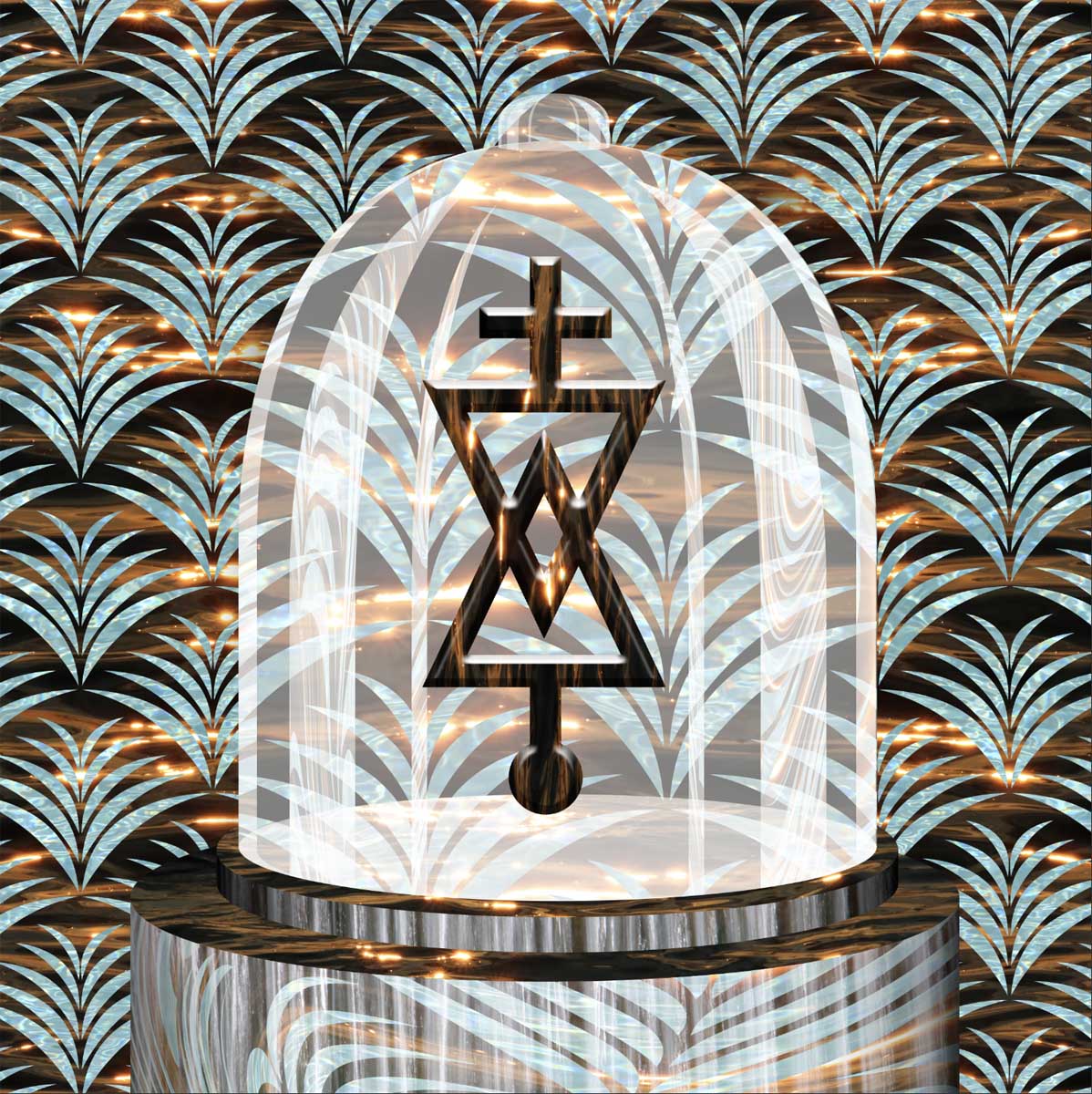
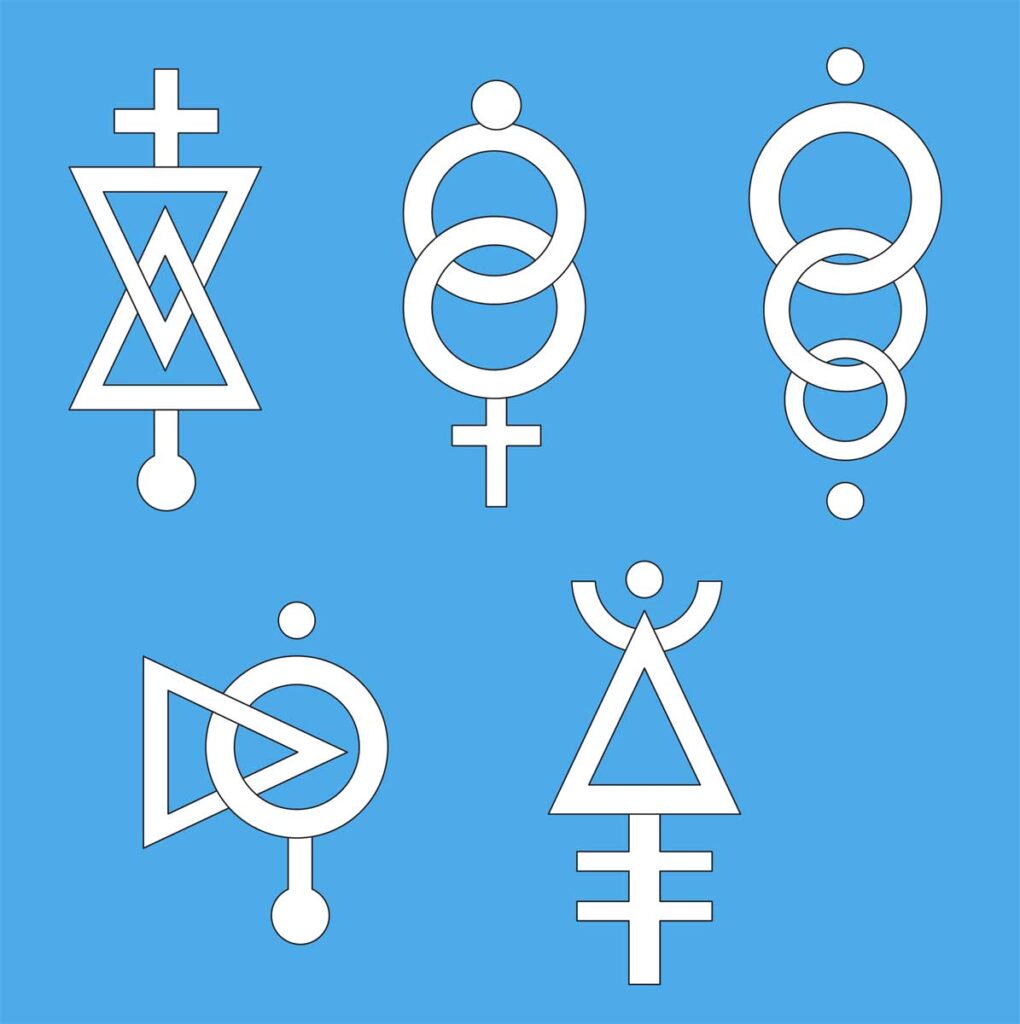
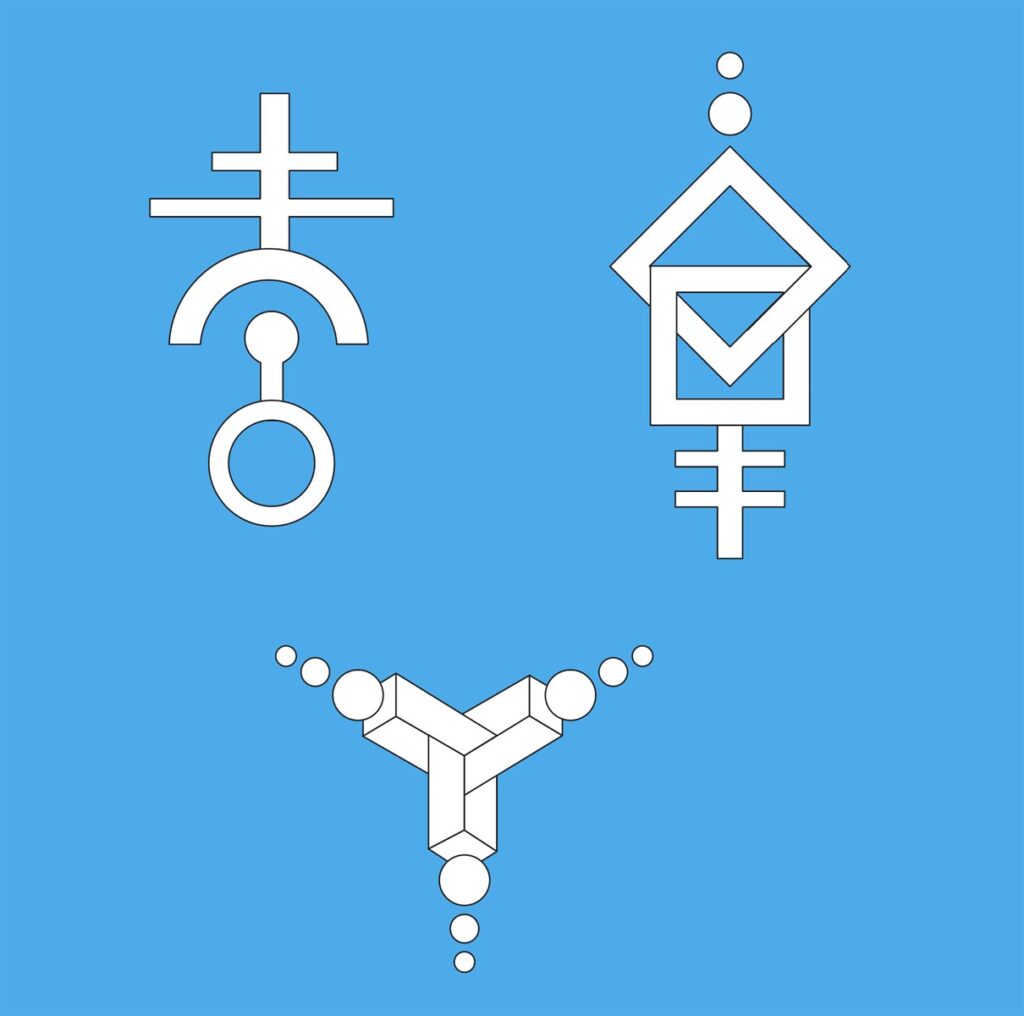
I am also experimenting with unidentifiable symbols — marks that resemble language but translate to nothing specific. A wordless icon.
What will viewers project onto it?
What stories will they author themselves?
COMPOSITION PHASE
Now comes the magic.
This is where drawing and photography begin their negotiation. Within these constructed spaces, I begin to fit the pieces together.
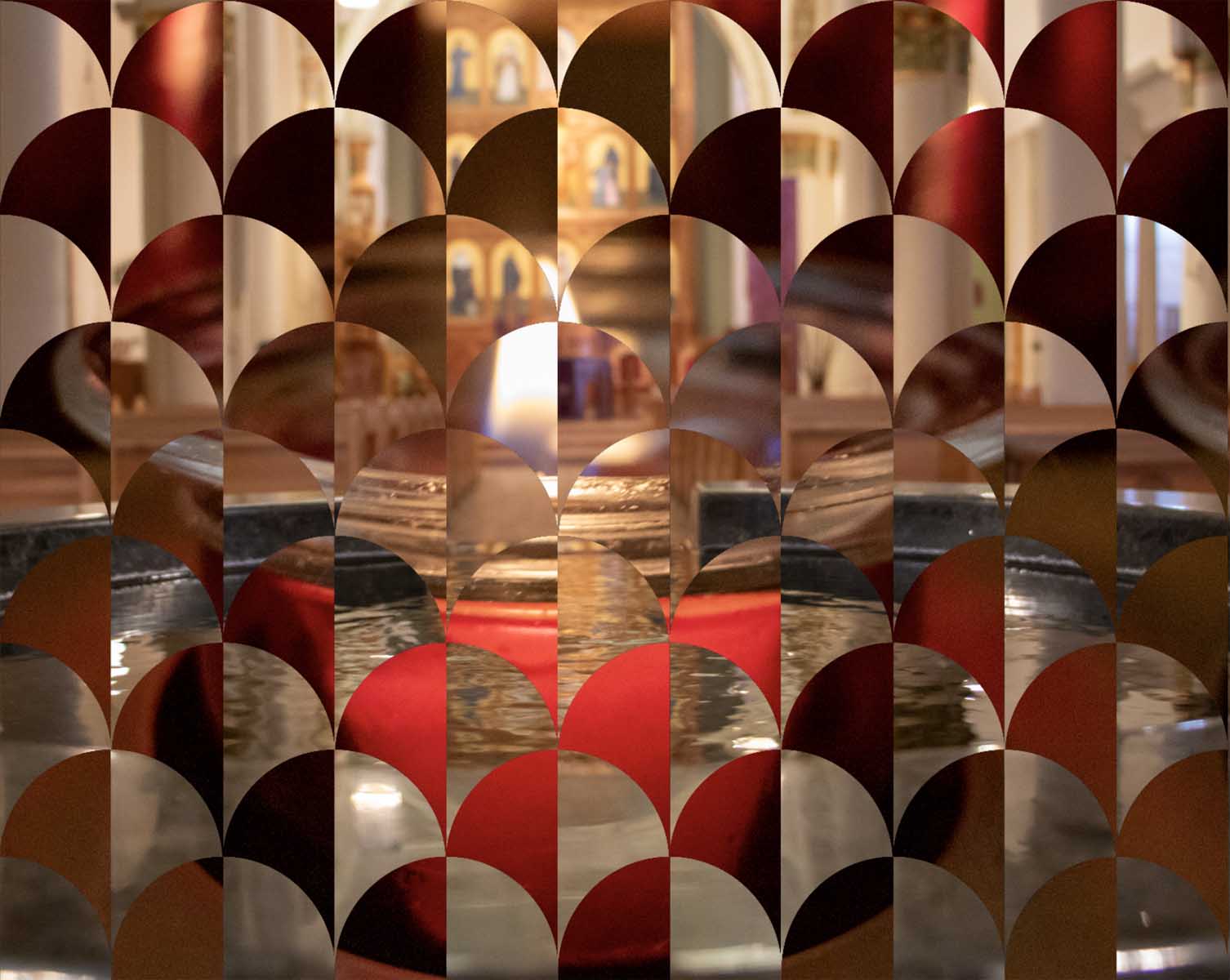
Using my own original photography, I meticulously composite images into the contours of my drawings. Light is adjusted. Perspective is refined. Surfaces are bent and re-shaped to sit convincingly within imagined structures. The photographs do not simply sit on top of the drawings — they are absorbed into them.
The earliest attempts in Precious feature single globes — isolated vessels testing the premise. One object. One shrine. One question. I moved through numerous variations, adjusting scale, background, icon, and lighting. At the time of this writing, I am still refining the direction. The instability feels appropriate for a series centered on constructed meaning.
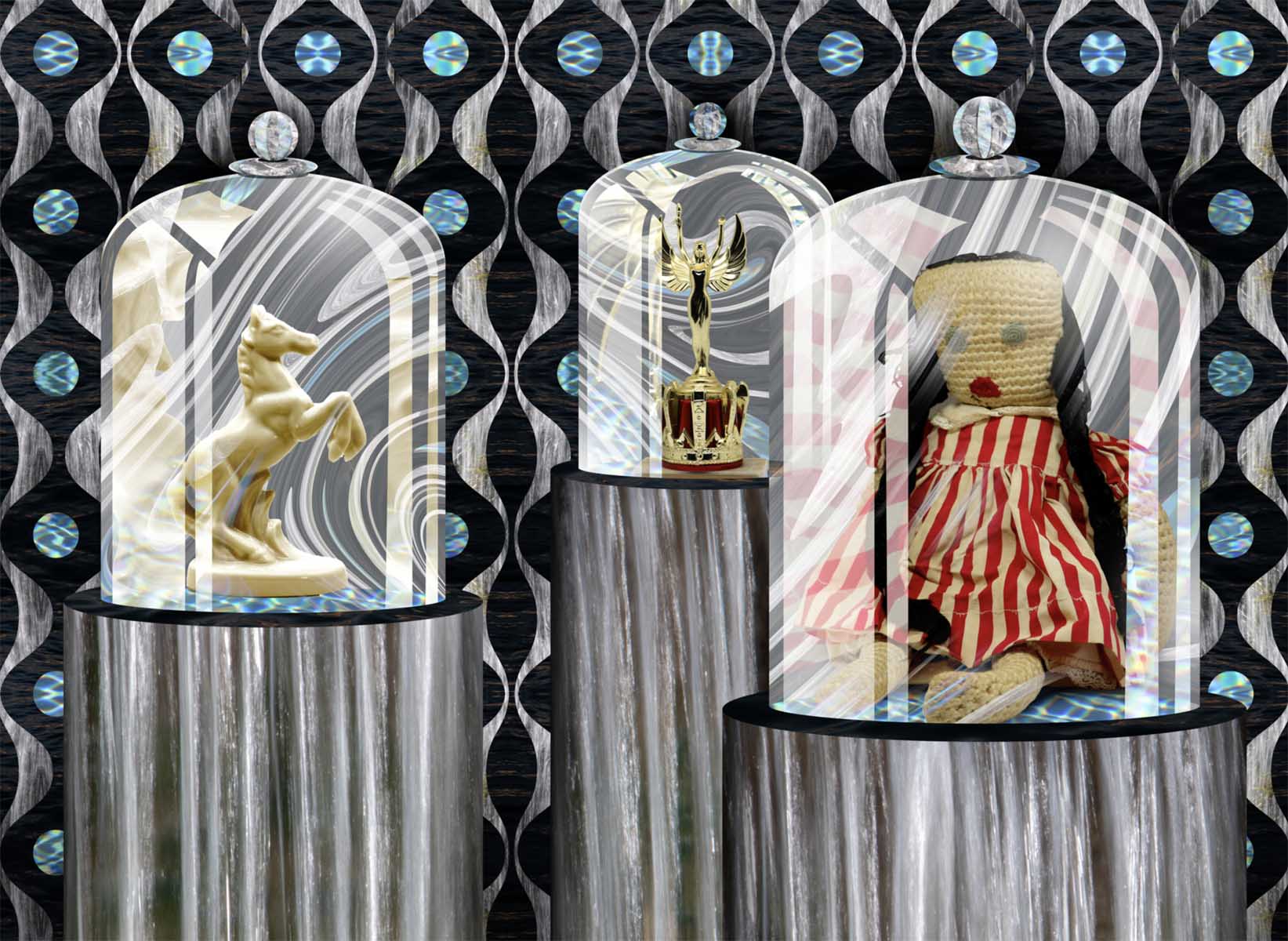
Later compositions introduced a grouping of three globes.
When objects are placed beside one another, comparison becomes inevitable. The pedestal begins to speak. The wallpaper begins to suggest lineage. The glass implies protection — or containment.
In one version, I placed actual objects from my childhood beneath the domes. They carry nostalgic significance for me.
In compositing these pieces, I am not only assembling an image — I am testing perception. How easily can meaning be manufactured? How quickly does context become belief?
REFINEMENT PHASE
As the series has developed, I’ve realized just how expansive the visual and conceptual possibilities within Precious truly are. Each variation shifts the dialogue slightly, opening new questions about symbolism, reverence, nostalgia, and perception. The collection continues to evolve as I move through these iterations.
I have designed a growing vocabulary of vessels, shrine structures, and ornamental wallpapers, paying close attention to how each pairing alters the emotional tone of the work. Certain combinations feel devotional, others theatrical, sentimental, or quietly unsettling. The environment itself begins to influence how meaning is perceived.
The objects placed beneath glass are intentionally varied. Some are naturally beautiful. Others are culturally symbolic, nostalgic, or strangely familiar. They are objects that invite projection: a lucky lure, a treasured charm, preserved flowers, relic-like forms, and antiquities that seem to carry significance simply because they have been elevated and protected.
In many of the works, birds, butterflies, and other creatures perch on or around the outer structures, adding another layer of symbolism and suggestion. Their presence introduces ideas of transformation, memory, spirituality, luck, and observation, though their meanings remain intentionally open-ended.
The more I build these environments, the more I return to the same question:
Are these objects inherently meaningful, or do we simply need them to be?
I’ve created 20 pieces for the collection including a video. Below are just a few…